calcPageSize())"
/>
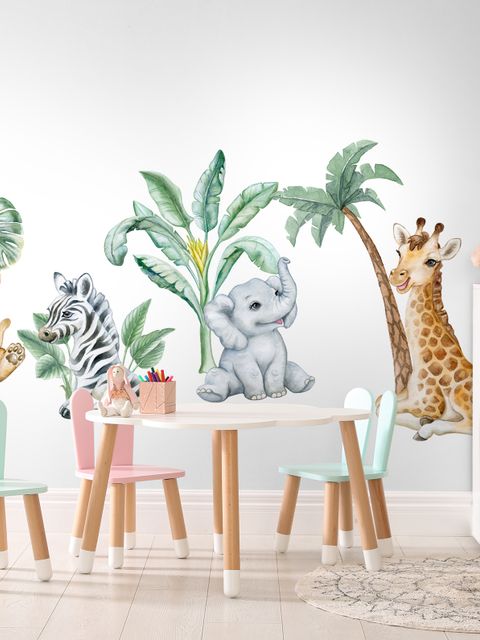
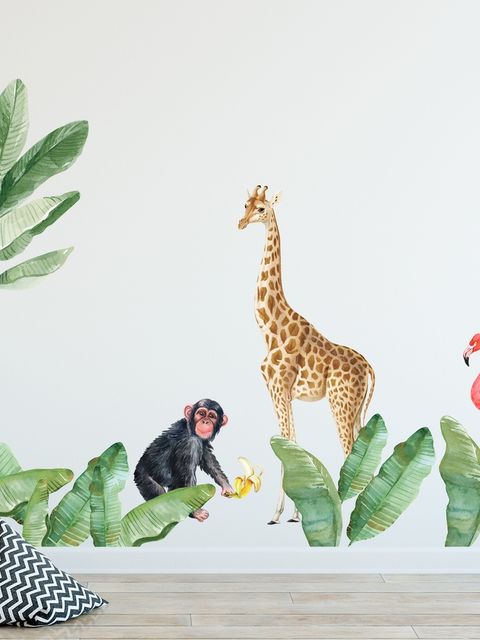
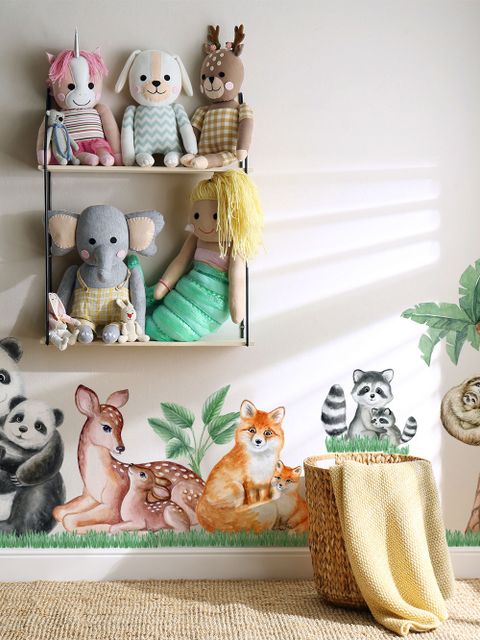
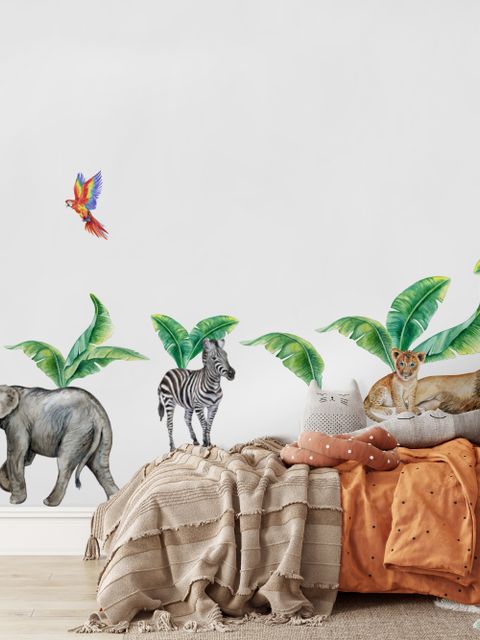
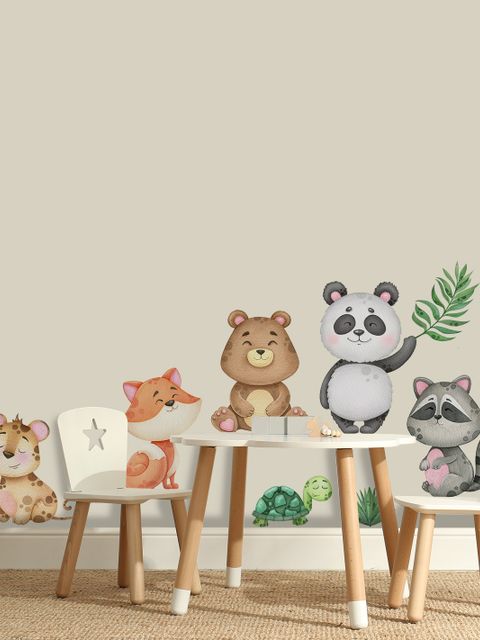
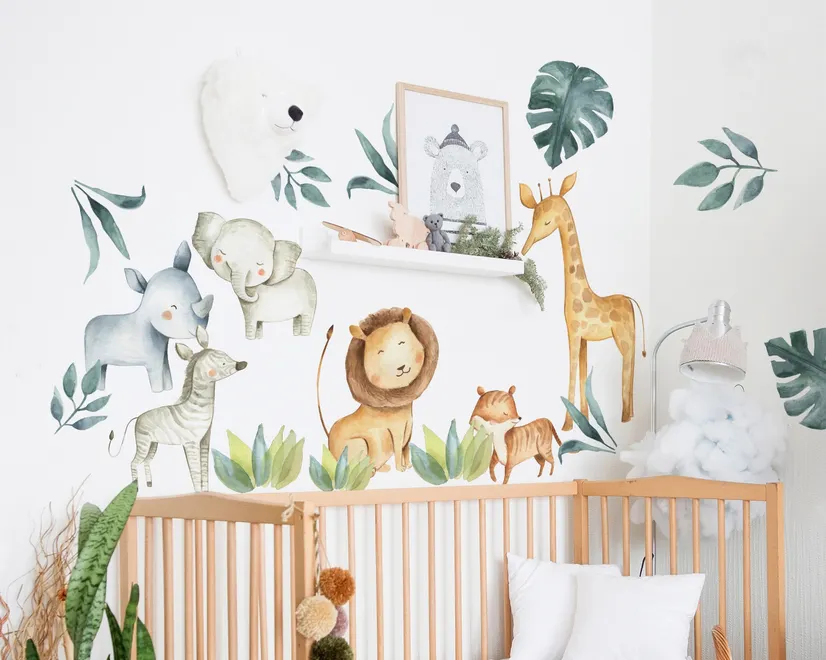
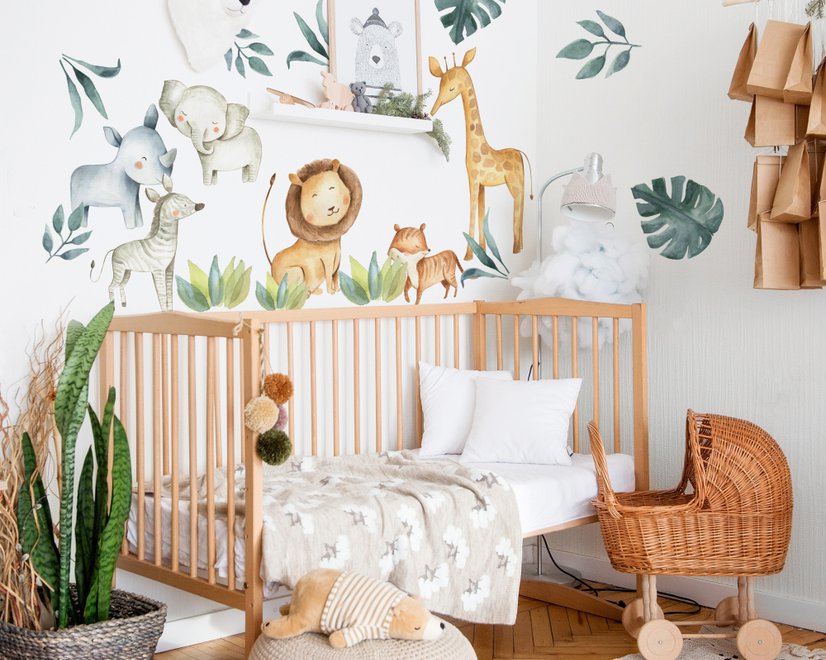
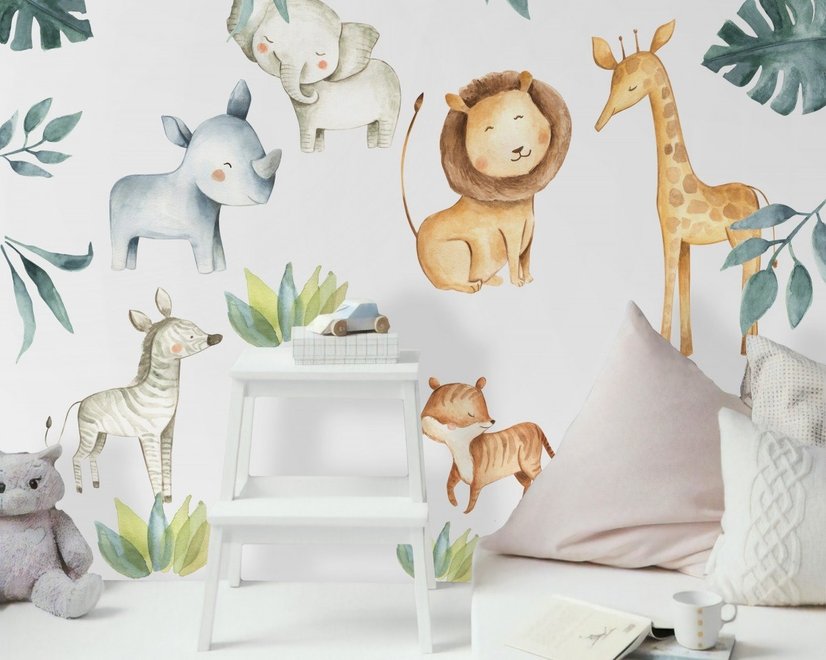
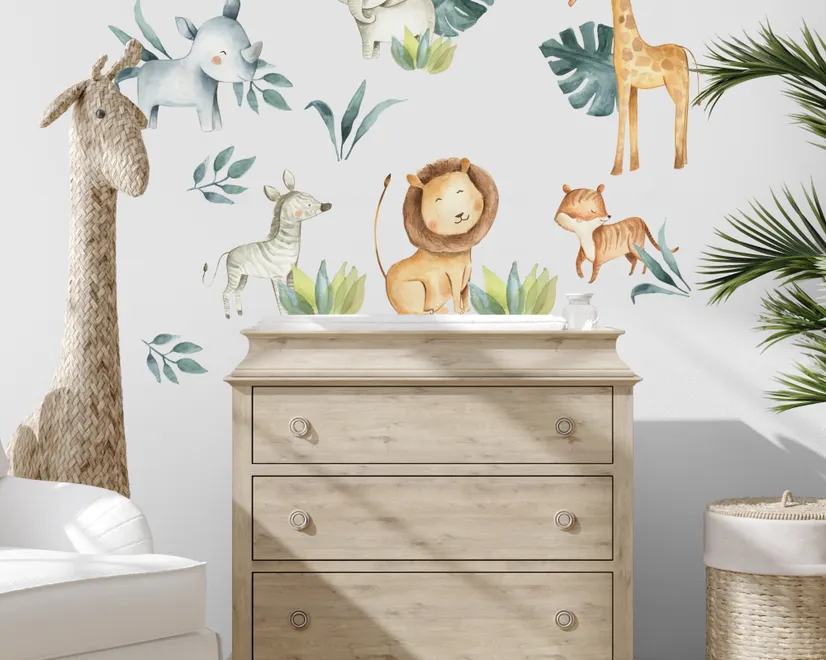
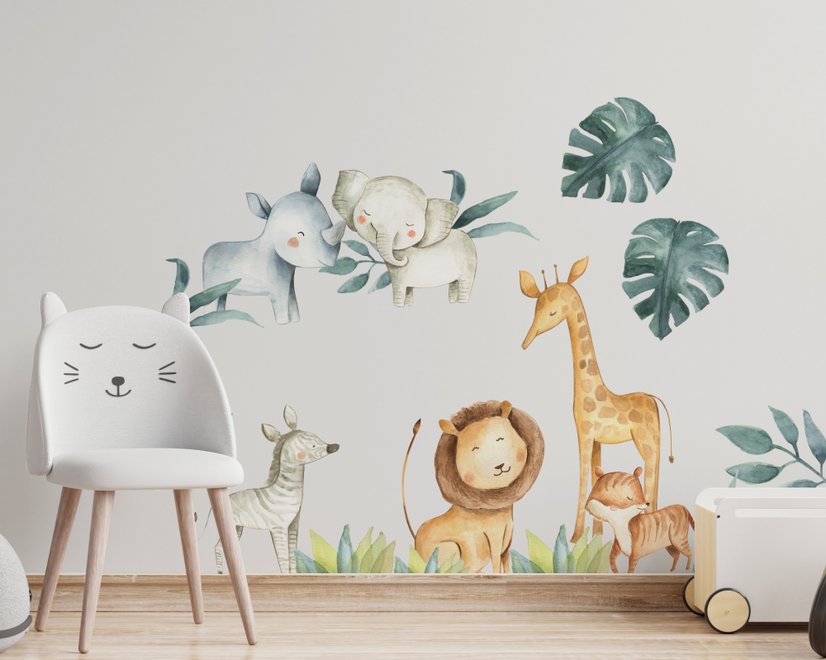
Kids Watercolor Safari Animals with Tropical Leaves Wall Decal Sticker
In stock
Shipping
Designs
Certified
Pricing
Payment
Special Offer on All Wall Decals!
EXTRA 25% OFF when you buy 2 or more decals !
No code needed • Limited time offer • Discount applied automatically at checkout
► THE WALL MUST BE DRY, LIGHT, SMOOTH, CLEAN, AND FREE OF DUST. IT IS NOT SUITABLE FOR THE TOO MUCH TEXTURED WALLS
Kids Watercolor Safari Animals with Tropical Leaves Wall Decal Sticker
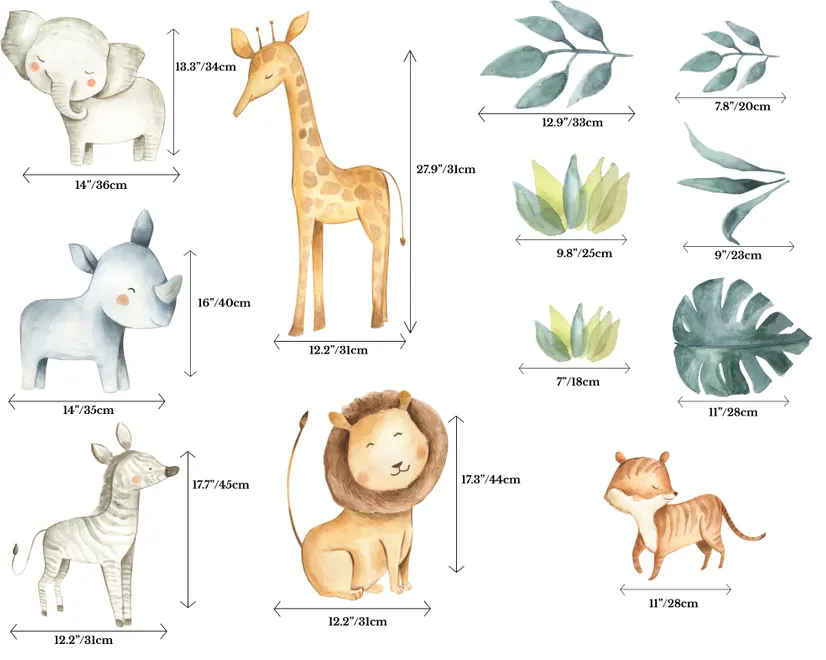
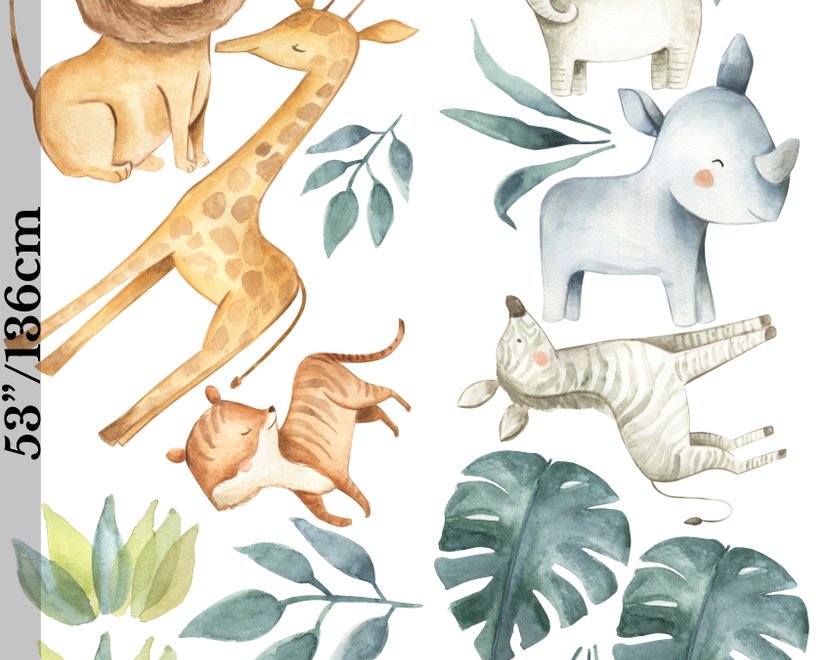
INCLUDES:
► 1 Separate cut out giraffe in approximate sizes of 28"/73cm
► 1 Separate cut out lion in approximate sizes of 18"/47cm
► 1 Separate cut out zebra in approximate sizes of 17"/45cm
► 1 Separate cut out hippopotam in approximate sizes of 15"/40cm
► 1 Separate cut out elephant in approximate sizes of 13"/35cm
► 11 Separate cut out leaf in approximate sizes of 11"/30cm to 9"/25cm to 7"/20cm
► Quick installation – Just peel and stick – you can easily re-position if needed.
► Cut from premium self-adhesive decal material specifically designed for home decor
► Matte finish
► Removable.
►We strongly recommend applying the decals 3 weeks after painting.Peel and stick wall decal material may not stick to textured, newly painted, painted with acrylic paint wall
►Green guard gold certified HP Latex print quality
Premium Print Quality & Inks
Exceptional print quality. Printed with Greenguard Gold-certified inks, ensuring safety for indoor use.
Pre-Cut
Our wallpapers come in precut panels, making installation quick and easy.
High Quality Materials
Our wallpapers are crafted from high-quality materials, ensuring durability and a luxurious finish that enhances any interior
Eco-Friendly
Crafted with eco-friendly materials and inks, making them a responsible choice for your space.
Original Design
Each design is unique, carefully created just for you with attention to every detail.
Custom Wall Size
Any wallpaper mural can be customized for your wall. You decide the exact size and how you want to crop it.

Shipping
Wherever you are in the world, we make your orders ready to ship within 3 business days. And we deliver all over the world within 4-10 business days. We ship it immediately by our partners UPS/FedEx, and the delivery time is 2-7 business days.
All customs duties, taxes, and import fees are fully covered by us. You will not be charged any additional fees upon delivery.
Return
- Custom-Sized Wallpaper Orders: Custom-sized wallpaper orders are non-returnable, except in cases of damage during transit or incorrect delivery. Please ensure accuracy before placing a custom-sized order.
- Damaged or Incorrect Items: If your item arrives damaged or you receive the wrong product, please contact us within 3 days. We will provide a replacement or refund, covering the return shipping costs.
- Return Eligibility: To be eligible for a return or exchange, the item must be in its original condition, unused, and undamaged. It should be returned within 30 days with all packaging, tags, labels, and accessories intact.
- Return Process: Contact our customer support team to initiate a return. We will guide you through the process. Please securely pack the item and ship it back to us using a reputable courier service.
- Refunds and Exchanges: Once we receive and verify your return, we will process your refund or exchange within 7 days. Refunds will be issued to the original payment method. Exchanges will be shipped to you at no additional cost.
Which areas suit classroom wallpaper or murals best?
Front feature wall, reading corner, library nook, or hallway section. Choose the walls seen on entry. Avoid coat hooks and heavy traffic zones so edges stay neat and the design reads clearly.
How do I choose designs for classroom wallpaper or murals?
Use soft colors and medium scale near teaching walls for focus. Save brighter motifs for corners or maker zones. Educational themes like world maps work well. Keep a light background and clear spacing so text and displays remain easy to read.
What materials is the wallpaper made of?
Our wallpapers are available in four different materials, each with unique properties:
Non-woven Wallpaper: Made from a high-quality, smooth matte surface with a weight of 150 grams per square meter, requiring paste for installation.
Peel & Stick Wallpaper: Crafted from a self-adhesive, smooth matte material with a thickness of 170 microns, designed for easy, paste-free application.
Premium Textured Wallpaper: This wallpaper has a heavier weight of 360 grams per square meter, providing a textured matte finish for a luxurious feel, and requires paste for installation.
Textured Wallpaper: A lighter textured material weighing 280 grams per square meter, also requiring paste for application.
Which materials work for classroom wallpaper or murals?
Pick washable nonwoven vinyl for daily cleaning. Peel-and-stick suits temporary installs on smooth, sealed paint. Look for low-emission inks and avoid plain paper near sinks or constant moisture.
How do I choose patterns for closet wallpaper or murals?
Use medium scale on small doors, larger motifs on open back walls. Light grounds help in low light. Geometric patterns read cleanly and match tones to shelving and hardware.
Which materials work for closet wallpaper or murals?
Nonwoven vinyl is wipeable for shoes and dust. Peel and stick fits rentals on smooth paint. Avoid plain paper near humid zones – consider laundry room wallpaper for adjacent spaces.
How should I measure for closet wallpaper or murals?
Measure each section separately. Note the width and height in three spots, keep the largest, then add 5-10 cm per edge for trimming around shelves.
What is the correct way to install closet wallpaper or murals?
Degrease, fill, and sand, then prime smooth. Remove shelves and hardware. Measure each section and cut with 5-10 cm extra. Start plumb, smooth panel by panel, wrap edges slightly, trim with a sharp blade. Refit parts and wait 24 hours before wiping.
Which rooms suit cloud murals best?
How do I choose style and scale for cloud murals?
Use a light background and soft edges for a calm look. Medium scale reads well from the floor. For low ceilings, choose open spacing and brighter sky tones. Taller rooms can handle deeper blues and larger forms.
Will cloud murals make a small room feel lower?
Not if the design is airy. Keep wall paint light, add perimeter lighting, and choose a matte surface to cut glare. A narrow painted border around the ceiling can frame the print without reducing the sense of height.
Can I install cloud murals on the ceiling?
Yes. Measure in three spots, use the maximum length and width, then add 5-10 cm trim. Snap a square guide, work with two people, and keep panels straight as you smooth. Browse ceiling wallpaper for more options.
Which rooms suit coastal wallpaper best?
Living rooms, bedrooms, entries, and powder rooms. Choose the wall you see first on entry. Keep nearby surfaces simple so the pattern reads clearly, and avoid walls broken by doors or deep shelves that interrupt the view.
What colors pair well with coastal wallpaper?
Soft white, sand, clay, and driftwood tones set a calm base. Add sea blues, aqua, or sage in small accents like pillows or glassware. Warm the palette with wicker or brass. Keep big textiles mostly solid so the wallpaper leads.
How do I style coastal wallpaper without looking themed?
Skip heavy nautical props. Use linen, rattan, seagrass, and light woods. Repeat one hue from the print in two or three accents and keep furniture lines simple. Leave a little blank wall and add warm lamps so the room feels relaxed.
Which rooms suit coffee murals best?
Kitchens, breakfast nooks, dining walls, home office corners, and café-style bars. Pick the wall seen first from the doorway or main seat. Keep it away from direct splash and heavy steam.
How do I choose style and scale for coffee murals?
Use medium scale so cups, beans, or typography read clearly. Light backgrounds suit small rooms. Vintage sketches feel calm, photo visuals feel bold. Tape a sample and check it in the day and night light.
Where should a coffee mural go in a kitchen?
Behind a coffee station or on a dining wall, not right behind a sink or hob. Center the main motif on the sightline, keep outlets clear, and avoid splitting key details across panel joins.
Which material is best and how do I clean it?
Nonwoven vinyl is durable and wipeable. Peel-and-stick works for rentals on smooth, sealed paint. Avoid constant steam. Clean with a damp cloth and mild soap only. No solvents or abrasives.
What colors define Boho wallpaper, and what pairs well with it?
Boho palettes lean earthy. Think cream, sand, and clay with warm notes of terracotta or rust. Greens like sage or olive, soft blues and teals, and a faded pink often appear. Pair with off white textiles, light wood, rattan, and linen, and repeat one accent twice.
Which rooms suit boho wallpaper best?
Living rooms, bedrooms, entries, and a home office wall. Choose the surface you see first from the doorway. Avoid walls chopped by doors or deep shelves so the pattern reads cleanly.
How large should the pattern be on boho wallpaper?
Match the scale to the wall size. Wide walls handle larger motifs. Small spaces look calmer with medium repeats and some open ground. Tape a big sample and check it in daylight and at night before you commit.
How do I style boho wallpaper without clutter?
Use a few natural textures like linen, rattan, and wood. Add leaf prints or nature elements as accents. Repeat one color from the print in two or three items. Keep shelves edited and pick simple lamp shapes so the wall remains the focus.
Will the colors be exactly the same as what I see on the screen?
There can be some variation between computer/phone screens and the final printed product. This is due to individual brightness and color intensity settings. Also, There may be differences in color depending on the material.
Which rooms suit culinary wallpaper best?
Kitchens, breakfast nooks, dining walls, pantry backs, and coffee stations. Pick the wall seen first on entry. Avoid heavy splash zones; use a washable finish near prep areas.
How do I choose the pattern scale for culinary wallpaper?
Small kitchens suit a medium repeat with an open background. Wide dining walls can take larger motifs. Tape a big sample, step back a few meters, and check it in both daylight and evening light.
How do I style culinary wallpaper without a theme look?
Keep large pieces solid. Repeat one color from the print in two accents. Mix wood, stone, and simple metals. Limit food props to one or two so the wall leads and the room stays calm.
Should I wallpaper one wall or wrap the whole kitchen?
One wall gives a clear focal point behind a table or coffee zone. Full wrap works in larger, well-lit rooms with quieter prints. In small spaces, stick to one wall and lighter tones.
Can culinary wallpaper go inside pantry walls or cabinet backs?
Yes. Choose washable vinyl or nonwoven. Prep a clean, smooth, dry surface. Line shelf backs or glass fronts for a neat pop. Avoid tight hinges, high heat, and direct splash.
Which rooms suit diamond murals best?
Living rooms, entries, dining walls, home offices, and hallway ends. Choose the wall seen first from the doorway. Avoid surfaces broken by doors or deep shelves so the pattern reads cleanly.
How do I centre a diamond mural on a feature wall?
Find the wall centre from the main viewing point, snap a plumb line, and start with a full diamond column on that line. Keep the first panel level and avoid placing points across corners or switches.
Which colours pair well with a diamond mural?
Soft white, warm grey, and natural wood keep it calm. For contrast, add navy, emerald, or charcoal in small accents. Brass or black hardware works; use one accent colour and repeat it sparingly.
How do I style furniture around a bold diamond mural?
Let the mural lead. Pick simple silhouettes, solid textiles, and a plain rug. Keep shelves edited. Echo one colour from the print in two small pieces and keep large items low and uncluttered.
What kind of wallpaper is best for a dining room?
Nonwoven is the easiest to install and remove. Use washable vinyl on a nonwoven base where spills are likely. Paper suits dry walls. Peel-and-stick is acceptable on smooth, sealed paint. Prefer a matte finish under artificial light.
What is the best wallpaper colour for a dining room?
Match the lighting and table tone. Warm neutrals such as cream, sand, and taupe suit evening settings. In brighter rooms, sage or blue grey stays crisp. Repeat one accent from the artwork or linens.
Should I paper one wall or all four in the dining room?
One wall behind the table provides a clear focal point and suits compact rooms. Full coverage fits larger, well-lit spaces with a quieter pattern. With wainscoting, paper the upper section only. Test with an oversized sample first.
Which rooms suit dollhouse wallpaper best?
Nurseries, kids’ bedrooms, play corners, and reading nooks. Use the wall seen first from the doorway or the one behind a bed or desk. Avoid walls cut by doors or deep shelves so the scene stays readable.
What age range is dollhouse wallpaper suitable for?
From toddler years to early teens. Pick softer palettes and simple houses for younger children, then move to finer line drawings and calmer colours as they grow. The look adapts with bedding, art, and lighting.
Which colours pair well with dollhouse wallpaper?
Soft white, cream, and light wood as a base. Add blush, dusty pink, sage, sky blue, or butter yellow in small accents. For definition, use a touch of charcoal on frames or hardware, and keep large textiles mostly solid.
How do I style a room with dollhouse wallpaper without clutter?
Keep large textiles solid. Repeat one hue from the print in two accents. Use simple storage and low-profile shelves. Choose light wood or white furniture, add one statement lamp, and leave some blank wall so the scene stays readable.
Which rooms suit dot murals best?
Entries, hall ends, dining walls, home offices, and kids' rooms. Choose the wall first in view with few breaks. A smooth surface and indirect light help the pattern read cleanly from typical viewing spots.
What pattern scale should I choose for dot murals?
Match scale to viewing distance. Wide walls can take larger dots; compact rooms read best with medium-sized dots. As a guide, set the dot diameter around 1 to 3% of the wall width. Tape a sample and check in day and evening light.
Should I pick tight or widely spaced dot murals?
Tight spacing looks lively but can feel busy in small rooms. Wider spacing reads calmer and airier. Use a lighter ground to keep the wall open. In low rooms, keep rows level and avoid heavy clusters near the ceiling line.
How do I style a room around dot murals?
Keep textiles mostly solid and furniture lines simple. Repeat one dot colour in two small accents. Use a plain rug, light wood or one metal finish, and simple frames with wide mats. Leave a little blank wall to avoid visual clutter.
Which rooms suit elephant wallpaper best?
Nurseries, children’s bedrooms, play corners, and reading nooks. Use the wall seen first from the doorway, often behind a cot, bed, or desk. Avoid walls broken by doors or deep shelving so the motif stays clear.
Is elephant wallpaper OK for a gender neutral nursery?
Yes. Choose soft greys, sage, sand, or cream with simple line drawings. Keep textiles mostly solid, add light wood and white, and use one accent colour sparingly for a calm, balanced scheme.
What colours pair well with elephant wallpaper?
Soft white, cream, light grey, sage, dusty blue, and sand work reliably. Add a small charcoal note in frames or hardware for definition. Keep larger textiles simple so the print remains the focus.
What do elephants symbolize in décor?
They are often linked with calm, protection, wisdom, and family. In some traditions, they are also a sign of good luck. A raised trunk is commonly viewed as a positive, welcoming detail.
How to choose wallpaper for an entryway?
Prioritise durability and clarity. Pick a washable nonwoven or vinyl finish, medium-scale pattern, and a matte surface to reduce glare. Choose the wall seen first on entry and avoid areas cut by doors or heavy hooks.
What is the best wallpaper colour for an entryway?
Light or mid-tones lift a narrow hall. Soft white, cream, sand, sage, or blue grey stay welcoming. Repeat one darker accent from the print in two small items, such as a frame and a bowl, to anchor the palette.
Should I paper one wall or the full entryway?
One wall creates a clear focal point and suits compact halls. Full wrap works in larger, well-lit spaces with a quieter pattern. If there is wainscoting, paper above it only. Test a large sample in daytime and evening light.
Which rooms suit feather wallpaper best?
Bedrooms, living rooms, entries, nurseries, and a study wall. Choose the surface first in view, often behind a bed or sofa. Avoid walls broken by doors or deep shelving so the motif reads clearly.
What is the texture of feather wallpaper?
Usually, a smooth nonwoven or vinyl base with a matte print. Some designs add a light emboss or linen effect for softness. Matte finishes keep edges gentle and reduce glare under lamps.
Which colours pair well with feather wallpaper?
Soft white, cream, dove grey, blush, sage, and dusty blue sit well. Natural wood and a touch of brass add warmth. Repeat one accent from the print in two small items to keep the scheme coherent.
Will feathers wallpaper make a room feel busy?
Not if you manage scale and spacing. Pick a light ground with a medium repeat and leave breathing room around the pattern. Keep large textiles mostly solid, use a single feature wall, and add layered lighting.
Which rooms suit fish murals best?
Bathrooms, powder rooms, dining walls, entries, bedrooms, and home offices. Pick the wall first in view. Keep out of direct splash and heavy steam unless the material is moisture rated.
Is a fish mural better on the accent wall or the whole room?
In small rooms, use one accent wall so the scene reads clearly. In larger, well-lit spaces, a full wrap works with a calmer design. Plan seems away from corners and fixtures, and test a large sample first.
Which colours pair with fish murals?
Sea tones like navy, teal, and sea green, balanced with soft white, sand, and driftwood wood tones. Brass or chrome accents both work. A matte finish reduces glare and keeps dark blues readable at night.
What room is flamingo wallpaper best for?
Bedrooms, powder rooms, entries, and a wall behind a bed or sofa. Choose the first-in-view surface and avoid walls broken by doors or deep shelving.
What do flamingos symbolize in décor?
Grace, balance, sociability, and a touch of tropical warmth. Often used to suggest optimism and a light, playful mood without feeling kitsch.
Is flamingo wallpaper better as an accent wall only?
In compact rooms, use one accent wall so the scene reads clearly. Larger, well-lit spaces can handle full coverage if the repeat is calm and the palette restrained.
Which colours pair with flamingo wallpaper?
Soft white, sand, and light wood as a base, with blush, coral, sage, or teal as accents. Add small black or brass details for definition without crowding the scheme.
How do I choose the right scale for a mural?
Measure the longest uninterrupted wall and consider the main sightlines. Large leaves suit wide walls; finer repeats work for smaller alcoves and desk nooks.
How much does a tropical wall mural cost?
Pricing depends on material: non-woven from $35 per m², textured from $40 per m², self-adhesive from $44 per m², and premium textured from $50 per m².
What design styles pair with tropical wallpaper?
Despite the term wallpaper in the question, these murals sit well in coastal, mid-century, boho, and contemporary rooms. Keep furniture clean-lined and let the print supply movement.
What's the difference between jungle and tropical wallpaper?
Jungle wallpaper is dense with multiple plant layers, often featuring animals like parrots, monkeys, and leopards woven into foliage. Tropical wallpaper offers cleaner, resort-inspired patterns with spaced-out palm fronds and banana leaves. Jungle feels wild and adventurous; tropical feels elegant and refined. Choose based on whether you want maximalist drama or sophisticated paradise vibes.
How do I keep jungle wallpaper from overwhelming my room?
Balance bold jungle prints with solid-colored furniture in neutral tones – cream, white, tan, or soft gray. Apply jungle wallpaper to one accent wall rather than all surfaces. Keep other decor minimal and let the wallpaper be the star. In larger rooms, full coverage works; in smaller spaces, restraint prevents visual chaos.
Is jungle wallpaper too bold for a bedroom?
Not necessarily. Choose lighter jungle patterns with white or cream backgrounds for a fresh, less intense feel. Dark jungle wallpaper can feel dramatic for bedrooms – consider using it on the wall behind your headboard only. Pair with neutral bedding and minimal accessories for balance. Many people love waking up surrounded by nature.
Can jungle wallpaper work in commercial spaces like restaurants?
Absolutely. Jungle wallpaper is increasingly popular in hospitality: restaurants, bars, hotel lobbies, and spas use bold jungle murals to create memorable atmospheres. The dramatic patterns photograph beautifully for social media. Our peel and stick options allow seasonal updates or temporary event installations.
What furniture pairs well with jungle wallpaper?
Complement jungle patterns with natural materials: rattan, bamboo, wood, and woven textures. Keep furniture colors neutral – cream, tan, black, or forest green. Brass and gold accents add warmth. Avoid competing patterns; solid upholstery lets the wallpaper shine. Velvet in jewel tones (emerald, sapphire) creates luxurious contrast.
Do you have jungle wallpaper with specific animals?
Yes, our jungle collection includes designs featuring parrots and tropical birds, monkeys, leopards and jaguars, butterflies, and mixed wildlife scenes. Use filters to find specific animal motifs. Animal elements add whimsy and discovery to any space.
What's the best jungle wallpaper for small rooms?
For small rooms, choose medium or small-scale jungle patterns rather than oversized leaves. Lighter backgrounds (white, cream) prevent the space from feeling closed in. Apply to one accent wall only. Avoid very dark jungle wallpapers in compact spaces without significant natural light.
Is jungle wallpaper suitable for kids' rooms?
Yes! Jungle themes are perennial favorites for children's spaces. Animal-filled designs create playful safari adventures. Choose age-appropriate patterns – friendly animals for young children, more realistic wildlife for older kids. Our jungle wallpaper is non-toxic and safe for children's bedrooms.
What styles of mountain wallpaper are available?
Our mountain collection includes realistic photographic murals, soft watercolor interpretations, abstract geometric mountains, and Scandinavian-style minimalist designs. Choose photographic for immersive drama, watercolor for dreamy softness, geometric for modern spaces, and Scandinavian for subtle elegance. Each creates a distinct atmosphere.
Will mountain wallpaper make my room feel cold?
Snowy mountain scenes can feel cool, which some people love. To warm the aesthetic, choose mountains with golden sunrise/sunset lighting, autumn colors, or green summer meadows. Pair cool mountain murals with warm textiles – wool, warm-toned rugs, wood furniture. Warm white lighting also softens cool imagery.
What is the best room for mountain wallpaper?
Bedrooms benefit from calming mountain vistas that promote better sleep. Home offices gain inspiring, focus-enhancing backdrops. Living rooms transform with statement accent walls. Meditation spaces embrace the spiritual mountain connection. Children's rooms work with softer, whimsical mountain interpretations.
What's the difference between realistic and watercolor mountain wallpaper?
Realistic/photographic mountain murals create immersive, window-like experiences – ideal for dramatic impact and rooms without views. Watercolor mountains offer softer, dreamier aesthetics that blend with various decor without overwhelming. Choose realistic for maximum impact; watercolor for subtle elegance and decorative flexibility.
Is mountain wallpaper suitable for Scandinavian-style interiors?
Absolutely. Scandinavian-inspired mountain wallpaper features simplified silhouettes, muted colors (soft grays, dusty pinks, sage greens), and minimalist aesthetics. These designs complement Nordic interiors perfectly and work in smaller spaces where dramatic photographic mountains might overwhelm.
Can I use mountain wallpaper in a nursery or kids room?
Yes! Mountain themes work beautifully in children's spaces. Choose softer watercolor or Scandinavian-style mountains in gentle colors for nurseries. Older children often love more dramatic mountain scenes. Mountain wallpaper creates serene, nature-connected environments for children of all ages.
What colors are available in mountain wallpaper?
Our collection spans cool snowy peaks (blues, whites, grays), green summer mountains, warm autumn scenes (oranges, golds, browns), misty neutral palettes, and pink/purple sunset mountains. Choose based on your room's color scheme and the mood you want to create.
Does mountain wallpaper work for cabin or lodge decor?
Perfectly. Mountain wallpaper enhances rustic cabin aesthetics naturally. Pair with wood furniture, leather seating, plaid textiles, and stone accents. Realistic mountain photography or autumn mountain scenes complement lodge decor particularly well. Create your mountain retreat anywhere.
Can you put wallpaper in a garage?
Yes, with considerations. Wallpaper works well in climate-controlled, insulated, or attached garages with stable temperatures (50-95°F). Detached, uninsulated garages with extreme temperature swings may cause adhesive failure. Surface prep is critical: drywall works best, painted concrete block may need primer, and bare concrete/metal generally aren't suitable for peel and stick.
What surfaces can garage wallpaper be applied to?
Drywall accepts wallpaper readily – clean and ensure smoothness. Painted concrete block can work with proper primer. Bare concrete and metal don't accept peel and stick well; mount wallpaper on panels instead. All surfaces must be clean, dry, and free of dust, grease, and debris for proper adhesion.
Will garage wallpaper peel in humidity or temperature changes?
In moderate conditions, no. Our wallpaper tolerates normal temperature fluctuations in attached/insulated garages. Extreme conditions (freezing cold, very high heat, high humidity without ventilation) may cause edge lifting over time. For best results, ensure reasonable climate control and adequate airflow in your garage.
Is garage wallpaper easy to clean?
Yes. Our wallpapers feature wipeable surfaces that handle dust, minor grease, and everyday garage grime. Clean with a damp cloth and mild soap. While not impervious to heavy automotive chemicals, normal garage use won't damage the material. For messy work areas, apply wallpaper to upper wall sections.
What are popular garage wallpaper themes?
Popular themes include: vintage automotive and classic cars, racing and motorsport imagery, industrial brick and concrete textures, sports team designs, American garage and gas station nostalgia, home gym motivation graphics, and workshop/hobby-specific designs. Man cave aesthetics dominate garage wallpaper requests.
Can I use wallpaper for a garage gym?
Absolutely. Garage gym wallpaper creates motivating workout environments. Choose bold graphics, inspirational imagery, or industrial aesthetics. Apply to walls where equipment doesn't contact the surface. Our wipeable material handles workout environment humidity when the space has adequate ventilation.
How do I prepare garage walls for wallpaper?
Clean thoroughly to remove all dust, dirt, grease, and cobwebs. Fill any holes or cracks and sand smooth. For painted surfaces, ensure paint is well-adhered (no peeling). Prime porous surfaces like concrete block. The wall must be completely dry before application. Temperature should be above 50°F during installation.
Is garage wallpaper suitable for a detached, unheated garage?
We don't recommend peel and stick wallpaper for detached, uninsulated garages with extreme temperature swings. Freezing temperatures can cause adhesive failure, and extreme heat affects the material. If your detached garage stays between 50-95°F year-round, wallpaper can work; otherwise, consider alternative wall treatments.
Is floral wallpaper outdated?
Not at all. While traditional tiny rose prints may feel dated, modern floral wallpaper is incredibly stylish. Contemporary options include moody dark florals, oversized blooms, watercolor interpretations, and abstract botanical patterns. The key is choosing modern interpretations rather than old-fashioned small-scale prints. Quality floral wallpaper remains a design classic.
What's the difference between dark floral and traditional floral wallpaper?
Dark floral wallpaper features dramatic blooms against black, navy, or deep green backgrounds – moody, sophisticated, and contemporary. Traditional floral typically shows lighter backgrounds with repeating small-scale patterns – romantic and classic. Dark florals suit modern interiors and make bold statements; traditional florals create softer, more feminine aesthetics.
What floral wallpaper pattern size works for small rooms?
Counterintuitively, larger patterns often work better in small rooms than small repeating prints. Large-scale florals on one accent wall create drama without overwhelming. Small-scale florals can make spaces feel busy and closed in. If using small patterns, pair with very simple furnishings and apply to limited wall area.
Can floral wallpaper work in masculine spaces?
Yes. Choose dark backgrounds with subtle botanical elements, abstract floral interpretations, or single-color schemes (black and white botanicals, navy florals). Avoid overtly romantic patterns with pinks and pastels. Dark moody florals work well in home offices, dining rooms, and living rooms regardless of gender aesthetic preferences.
What rooms are best for floral wallpaper?
Bedrooms naturally suit romantic or dramatic florals. Dining rooms shine with bold floral statements. Powder rooms and bathrooms handle dramatic patterns well as small spaces. Living rooms work best with floral accent walls. Home offices benefit from beautiful, inspiring surroundings. Virtually any room can incorporate florals with the right pattern choice.
What's the most timeless floral wallpaper style?
Botanical prints with realistic flower illustrations tend to be most timeless. Watercolor florals age well due to their artistic quality. Dark florals have proven staying power in contemporary design. Avoid trendy color combinations or very stylized interpretations that may date quickly. Classic flowers (roses, peonies) in sophisticated colorways remain perpetually stylish.
What furniture pairs with floral wallpaper?
Let florals be the star by keeping furniture relatively simple. Solid-colored upholstery in colors pulled from the wallpaper creates cohesion. Natural materials (wood, rattan, linen) complement botanical themes. For bold florals, choose neutral furniture; for subtle florals, you can be more adventurous with furnishings. Avoid competing patterns nearby.
Is watercolor floral wallpaper different from regular floral?
Yes. Watercolor floral wallpaper features soft, painterly interpretations with visible brushwork and color bleeding – dreamy and artistic. Regular floral wallpaper typically shows more defined, graphic representations. Watercolor florals feel softer and more romantic; they blend easily with various decor styles and rarely feel too bold or overwhelming.
Is kids map wallpaper educational?
Yes! Map wallpaper sparks curiosity about geography, cultures, and the wider world. Children learn continent names, ocean locations, and global awareness through daily exposure. Environmental learning reinforces memory more effectively than memorization alone. Kids naturally ask questions about places, creating educational conversations.
Are kids map wallpapers geographically accurate?
It depends on the style. Whimsical illustrated maps prioritize engagement over cartographic precision – perfect for young children where wonder matters more than accuracy. Our more realistic map designs maintain general geographic correctness suitable for learning fundamentals. For precise geographic education, supplement with atlas resources.
What age is kids map wallpaper appropriate for?
Map wallpaper works for all ages with appropriate style choices. Toddlers (2-5) enjoy illustrated maps with animals and bright colors. School-age children (6-10) benefit from maps with landmarks and country labels. Pre-teens (11+) appreciate sophisticated vintage-style or realistic maps that won't feel babyish. Choose complexity based on developmental stage.
Should I choose world map or US map wallpaper?
World maps provide global perspective and suit most children. US maps reinforce national geography – ideal for learning states, capitals, and regions. Consider your educational priorities: world maps build global awareness, while regional maps deepen specific geographic knowledge. Some families choose different maps for different rooms.
What's the difference between animal map and regular map wallpaper?
Animal world maps feature illustrated creatures from each continent (lions, kangaroos, pandas) alongside geographic shapes – engaging for young children who love animals. Regular map wallpaper focuses on geographic features, landmarks, or vintage cartography without animal illustrations. Animal maps are more playful; regular maps are more traditional.
Can kids map wallpaper work in a classroom or homeschool room?
Absolutely. Map wallpaper creates excellent learning environments. Large-scale maps serve as constant visual references during geography lessons. The engaging design keeps children interested in learning. Our wallpaper is easy to install in classroom settings and removes cleanly if needed for future updates.
Will my child outgrow map wallpaper quickly?
Choose age-appropriate styles to maximize longevity. Very cartoonish maps suit young children but may feel babyish by age 8-10. Vintage-style maps, muted color palettes, and more sophisticated designs grow with children into teenage years. Geographic interest tends to increase as children learn more, so quality map wallpaper often becomes more appreciated over time.
What colors are available in kids map wallpaper?
Our collection ranges from bright primary colors perfect for playrooms to soft pastels for nurseries to muted earth tones for bedrooms. Blue-dominant ocean maps feel calm; colorful continent maps feel energetic. Choose based on room function – calming colors for bedrooms, stimulating colors for play and learning spaces.
Is peel and stick wallpaper safe for baby rooms?
Yes, Wallmur peel and stick wallpaper is completely safe for nurseries. Our wallpapers are non-toxic, VOC-free, and phthalate-free. The water-based adhesive emits no harmful fumes, making it safe to install even during pregnancy. All materials meet or exceed safety standards for children's products.
What are the best colors for nursery wallpaper?
Soft, calming colors work best for nurseries. Sage green, dusty pink, powder blue, cream, and soft gray promote relaxation and better sleep. For gender-neutral options, consider nature-inspired palettes with beige, soft green, or warm white. Avoid overly bright or busy patterns for main walls – save those for accent features.
How do I install wallpaper in a nursery?
Installing peel and stick wallpaper is simple: clean your wall, start from the top, peel backing gradually while smoothing with a squeegee, and trim excess at edges. No paste or special tools needed. Most nursery walls take 1-2 hours. Pregnant women can safely install our VOC-free wallpaper, though having a partner help with alignment makes the job easier.
Can I remove nursery wallpaper easily when my child grows up?
Absolutely. Our peel and stick wallpaper removes cleanly without damaging walls or leaving residue. Simply peel from a corner at a 45-degree angle. This makes it perfect for renters or parents who want to update the nursery as their child grows. Most walls require no repair after removal.
What patterns are calming for babies?
Calming patterns for newborns include soft clouds, gentle waves, subtle stars, and simple botanical designs. Avoid busy, high-contrast patterns on all walls. As babies grow (6+ months), they enjoy animal patterns, nature scenes, and gentle geometric shapes. Woodland themes and safari animals remain popular choices that work from infancy through toddler years.
How much wallpaper do I need for a nursery?
Measure your wall's height and width in inches, then multiply for square footage. Add 10% for pattern matching and trimming. Our custom sizing eliminates most waste – simply enter your exact wall dimensions and we'll create panels to fit. For standard nurseries (10x12 feet), expect to cover 2-3 walls with approximately 200-300 square feet of wallpaper.
Is nursery wallpaper better than paint?
Wallpaper offers advantages paint cannot match: instant pattern and texture, no drying time, easy removal for renters, and the ability to create feature walls without artistic skill. Our peel and stick wallpaper installs faster than achieving a perfect paint job and can be changed without repainting. Paint may be simpler for solid colors, but for creating a truly magical nursery environment, wallpaper wins.
What's the difference between nursery wallpaper and regular wallpaper?
While construction is similar, nursery-specific designs feature age-appropriate patterns, calming color palettes, and themes that support child development. Our nursery collection emphasizes safety with non-toxic materials and includes whimsical designs like animals, clouds, and nature scenes specifically curated for baby rooms.
What is the best wallpaper for kids room by age?
For toddlers (2-4): bright primary colors, animals, and simple shapes. Young children (5-8): themed designs like dinosaurs, space, or princesses. Pre-teens (9-12): sophisticated patterns, geometrics, or subtle themes. For longevity, choose timeless designs like world maps, woodland scenes, or soft geometrics that appeal across age groups.
Is kids wallpaper washable?
Yes, Wallmur kids wallpaper features a wipeable surface designed for active households. Clean everyday marks with a damp cloth and mild soap. For stubborn spots, gently rub without abrasive materials. While not entirely stain-proof, our wallpaper handles normal wear better than standard paint and maintains its appearance through typical childhood messes.
How durable is peel and stick wallpaper for active kids?
Our premium peel and stick wallpaper withstands normal wear from active children. It won't peel from running, playing, or accidental bumps. The adhesive remains secure for years but removes cleanly when desired. For high-traffic areas or very active households, consider using wallpaper on upper wall portions or accent walls rather than at child height.
What's the difference between nursery and kids wallpaper?
Nursery wallpaper features calming colors and soothing patterns for newborns and infants. Kids wallpaper offers bolder colors, more dynamic themes, and designs that appeal to older children. Both are equally safe and non-toxic. The main difference is aesthetic – nursery designs prioritize relaxation, while kids designs embrace fun and personality.
Can kids help install peel and stick wallpaper?
Absolutely! Children ages 8 and up can actively participate in installation. They can help align panels, smooth air bubbles, and trim edges under supervision. It's a fun family activity that gives kids ownership of their space. Younger children can help with simpler tasks like holding panels or choosing which wall to cover.
How do I choose wallpaper my child won't outgrow quickly?
Select timeless patterns over trendy character themes. World maps, nature scenes, geometric patterns, and subtle color palettes remain appealing as children mature. Avoid designs tied to specific shows or characters that may lose appeal. If your child loves a specific theme, use it on one accent wall rather than the entire room.
Will bright wallpaper colors overstimulate my child?
Bright colors can energize rather than calm, which matters for bedrooms. For sleeping areas, choose softer tones or use bright designs on one accent wall only. Save vibrant patterns for playrooms or study areas where energy is welcome. Balance bold wallpaper with neutral furniture and bedding to prevent visual overwhelm.
What are popular kids wallpaper themes for 2026?
Trending themes include: nature and botanical designs, space exploration, underwater worlds, safari and jungle animals, minimalist geometric patterns, and vintage-style maps. Sustainable and eco-friendly aesthetics are also popular. Character themes remain steady sellers, but timeless designs are increasingly preferred by parents seeking longevity.
What's the difference between tropical and jungle wallpaper?
Tropical wallpaper typically features palm fronds, banana leaves, and paradise-inspired patterns with cleaner, more spaced-out designs. Jungle wallpaper is denser, often including animals, multiple plant layers, and a more wild, overgrown aesthetic. Tropical feels resort-like and refined; jungle feels adventurous and maximalist. Both work beautifully depending on your style preference.
How do I style tropical wallpaper without looking dated?
Choose sophisticated color palettes (emerald, navy, black/white botanical) over bright neon tones. Pair with neutral furniture in white, cream, or natural wood. Use quality patterns with botanical accuracy rather than cartoonish designs. Apply to one accent wall rather than overwhelming the space. Add natural textures like rattan, jute, and linen to complement rather than compete.
Can tropical wallpaper work in a bathroom?
Yes! Bathrooms are ideal for tropical wallpaper, creating spa-like resort vibes. Our peel and stick wallpaper handles normal bathroom humidity in well-ventilated spaces. Avoid direct water contact areas (inside showers). For bathrooms without windows, ensure good ventilation. The tropical-bathroom aesthetic is intentional and luxurious, not misplaced.
What's the difference between palm leaf and banana leaf wallpaper?
Palm leaf patterns feature feathery, segmented fronds with a lighter, more delicate appearance. Banana leaf designs showcase large, dramatic, paddle-shaped leaves – bolder and more statement-making. Palm feels coastal and breezy; banana feels more jungle-luxe. For smaller rooms, palm's lighter scale often works better; for dramatic impact, banana leaves deliver.
Will tropical wallpaper look outdated quickly?
Quality tropical patterns are design classics, not fleeting trends. They've remained popular since the mid-20th century. Choose timeless color combinations (greens with neutral backgrounds, black and white botanicals) over trendy neons. Elegant botanical illustrations age better than stylized cartoon versions. Well-chosen tropical wallpaper remains stylish for decades.
What furniture pairs well with tropical wallpaper?
Complement tropical patterns with natural materials: rattan, bamboo, light-toned wood, and woven textures. Keep furniture silhouettes clean and colors neutral (white, cream, tan, soft gray) to let wallpaper be the star. Add brass or gold accents for warmth. Avoid competing patterns – solid upholstery works best against busy botanicals.
Is tropical wallpaper suitable for small rooms?
Yes, with strategic choices. Select smaller-scale palm patterns rather than oversized banana leaves. Choose lighter backgrounds that don't shrink the space visually. Apply to one accent wall rather than all surfaces. Vertical leaf patterns can actually elongate small rooms. Avoid dark tropicals in compact spaces without abundant natural light.
Can tropical wallpaper work in modern minimalist homes?
Absolutely. Choose monochromatic tropical prints (all green, black/white) for cleaner aesthetics. Apply to a single accent wall, keeping other surfaces simple. Pair with minimal furniture featuring clean lines. The contrast between minimalist styling and botanical abundance creates sophisticated visual interest without feeling chaotic.
Will forest wallpaper make my room feel dark?
Not necessarily. Misty forest and birch tree patterns actually brighten rooms with soft grays and whites. Dense, dark forest murals can feel heavy without proper lighting. Balance dark forest wallpaper with wall sconces, floor lamps, or warm ceiling lights. For naturally dim rooms, choose lighter foggy forest or white birch designs.
What's the difference between birch tree and pine forest wallpaper?
Birch tree wallpaper features clean white trunks with minimal foliage – graphic, modern, and Scandinavian-inspired. Pine forest wallpaper shows fuller trees with dense green needles – traditional, woodland, and nature-immersive. Birch suits contemporary interiors; pine creates classic forest retreat aesthetics. Both reduce stress through biophilic design principles.
What is the best room for forest wallpaper?
Bedrooms benefit most from forest wallpaper's calming, sleep-promoting qualities. Home offices gain focus-enhancing nature elements. Meditation and yoga rooms embrace wellness connections. Living rooms transform with forest accent walls. Bathrooms create spa-like woodland retreats. Any room benefits from biophilic design's stress-reducing effects.
What is foggy forest wallpaper good for?
Foggy forest wallpaper creates serene, meditative atmospheres with soft color gradients. The misty effect makes spaces feel larger while remaining visually calm. Ideal for bedrooms, home offices, and relaxation spaces. Foggy designs photograph beautifully – popular for home studios and video call backgrounds.
Is forest wallpaper suitable for a cabin or rustic home?
Absolutely. Forest wallpaper enhances cabin aesthetics naturally. Pair with wood furniture, leather seating, plaid textiles, and natural stone accents. Pine forest, autumn woodland, and mountain scenes complement rustic decor. Our peel and stick options install easily for seasonal cabin updates or permanent lodge aesthetics.
What's the difference between realistic and artistic forest wallpaper?
Photographic/realistic forest murals create immersive, window-like experiences – ideal for urban apartments craving nature. Watercolor forests offer softer, stylized aesthetics blending with various decor. Abstract forest interpretations suit contemporary spaces. Choose realistic for maximum nature connection; artistic for decorative flexibility.
What are the biophilic design benefits of forest wallpaper?
Biophilic design connects humans with nature, reducing stress, lowering blood pressure, and improving mood. Forest imagery triggers these calming responses even indoors. Studies show nature visuals improve focus, creativity, and sleep quality. Forest wallpaper delivers these wellness benefits year-round, regardless of outdoor access or weather.
What lighting works best with dark forest wallpaper?
Balance dark forest murals with layered lighting: warm-toned wall sconces at eye level, adjustable floor lamps for reading areas, and ambient ceiling fixtures. Avoid single overhead lights that create harsh shadows. Picture lights highlighting the mural add depth. Warm white bulbs (2700-3000K) complement forest colors better than cool tones.
Which art wallpaper style matches my interior?
Traditional interiors with classic furniture suit Renaissance, Baroque, and Impressionist art. Modern minimalist spaces pair with Abstract Expressionism and geometric designs. Mid-century homes complement Japanese prints and simplified artistic styles. Contemporary interiors welcome street art, digital art, and bold Pop Art. Match the art's era and mood to your existing decor style.
Can I create custom wallpaper from my own artwork or photos?
Yes! Our custom wallpaper service transforms your images into full-wall murals. Upload high-resolution files (minimum 150 DPI at final print size) and we'll create perfectly sized panels. Popular uses include artist portfolio displays, enlarged family photographs, and one-of-a-kind custom designs. Processing takes 5-7 business days.
What is Art Deco wallpaper style?
Art Deco wallpaper features bold geometric patterns, metallic accents, luxurious symmetry, and 1920s glamour. Signature elements include fan shapes, stepped geometrics, sunburst motifs, and gold-black color combinations. This timeless style elevates dining rooms, entryways, and powder rooms with sophisticated, never-dated elegance.
Is art wallpaper better than a gallery wall?
Art wallpaper offers advantages over traditional gallery walls: single installation versus multiple frame hangings, covers wall imperfections, creates immersive experiences impossible with framed pieces, and costs less than purchasing multiple artworks. Gallery walls suit curated collections and changeable displays; art wallpaper delivers dramatic full-wall impact.
What is the print quality of famous artwork reproductions?
Our art wallpapers use advanced printing capturing color accuracy, brushstroke textures, and subtle gradations. High-resolution files optimized for large-scale reproduction ensure sharpness even up close. Museum-quality reproduction techniques preserve artistic integrity while translating masterpieces to wall-sized formats.
What is Japanese ukiyo-e art wallpaper?
Ukiyo-e refers to Japanese woodblock prints from the Edo period, featuring waves, mountains, nature scenes, and traditional Japanese aesthetics. Famous examples include Hokusai's 'Great Wave' and Hiroshige's landscapes. Ukiyo-e wallpaper creates distinctive focal points bridging Eastern and Western design sensibilities with timeless cultural depth.
Are art reproductions on wallpaper licensed?
Most classical artwork (pre-1900) is in the public domain, requiring no licensing for reproduction. Modern and contemporary works may have copyright restrictions. Our collection primarily features public domain masterpieces and original commissioned designs. For copyrighted images you wish to reproduce, ensure you have proper rights before ordering custom wallpaper.
Will art wallpaper look pixelated on large walls?
No. Our art wallpapers are produced from high-resolution source files specifically optimized for large-scale printing. Minimum 150 DPI at final size ensures crisp detail at any viewing distance. For custom uploads, we verify resolution before production and advise if source quality won't meet our standards.
Which rooms work best with black and white wallpaper?
Entries and corridors gain definition, living and dining areas get a clean structure, and a powder room can carry a bolder motif without overwhelming daily spaces. For bedrooms, select softer contrast or a smaller repeat, and in a home office, prefer simple stripes or grids that stay composed on camera.
How do I style black and white wallpaper with furniture and decor?
Start with warm wood and textured fabrics to soften contrast, then repeat one accent color in two or three places to tie the scene together. Keep large textiles near solid or near solid tones so the wall can lead, and use a mirror or a warm metal lamp to lift the balance. This approach works particularly well in minimalist interiors. Avoid stacking competing large-scale prints directly at the seams.
What makes floral decals practical compared with a full wallpaper roll?
They arrive as separate printed pieces with a removable adhesive, so you place only what you need and leave open wall where it helps the room breathe. This flexibility makes them especially practical for nurseries where design needs change frequently. Traditional rolled wallpaper requires seam alignment and covers the entire surface, while decals allow selective accents and easy editing of the composition.
What wall finish and room conditions help decals adhere reliably?
A smooth, clean, dry surface works best, ideally, paint in eggshell, satin, or semi-gloss. Let fresh paint cure for at least two weeks, wipe with mild soap and water, allow it to dry completely, then finish with a light isopropyl alcohol wipe. Avoid heavy texture, dust, and damp areas like bathrooms, since edges may lift.
Can I lift and move a decal after placing it, and how should I remove it months later?
Minor adjustments are possible during the first session if you lift slowly from a corner and reseat the piece. This flexibility makes decals especially popular for nurseries where designs change as children grow. For removal later, warm the decal gently with a hair dryer for about twenty seconds and peel back at a low angle while supporting the wall. On sound, primed paint, this usually comes off cleanly, but testing a small spot first is sensible.
How do I map out a balanced arrangement before sticking the pieces?
Lay the set on the floor, build a cluster you like, and take a quick photo for reference. Mark faint pencil guides on the wall, tack larger blooms with painter’s tape, and step back a few paces to judge spacing. This method works well whether you're creating a romantic or modern composition. When satisfied, apply from the center outward, smooth to push out air, and press along every edge so each piece sits flat.
How do geometric wall decals differ from patterned wallpaper in day-to-day use?
Decals are separate shapes with a removable adhesive, so you place only what you need and leave open wall between elements. This makes them popular for playrooms where you can adjust the design as children grow. Wallpaper arrives in panels and covers the surface continuously with matched seams. If you want a small grid or a single band around a room, decals give that control without a full wrap.
What wall conditions help geometric decals stay flat, and how should I prepare the surface?
A smooth, clean, dry wall finished in eggshell, satin, or semi-gloss works best. Allow new paint to cure fully, wash with mild soap, rinse, let it dry, then make a quick pass with isopropyl alcohol so oils are gone. This careful preparation is especially important for minimalist interiors where every line must read cleanly. Heavy texture, dust, or moisture can lift edges and break straight lines.
Can I adjust placement after I start, and what is the careful way to remove decals later?
Minor shifts are possible during the first session if you lift a corner slowly and reseat the piece. For removal months later, warm the shape gently with a hair dryer and peel back at a shallow angle while supporting the wall with your free hand. This clean removal works well in apartments where you may need to restore walls when moving. On sound, primed paint this is usually clean, but test a discreet spot first.
How can I keep spacing even and lines true while installing a geometric set?
Mark a light pencil grid or use a laser level, then set two reference points to keep everything square. Cut a simple spacer card, for example 5 centimeters or 2 inches wide, and use it between shapes as you work. This precision is essential for achieving the clean look typical of Scandinavian interiors. Step back a few paces after every few pieces, confirm alignment, and press around each edge so the geometry stays crisp.
In what cases are nature wall decals a better pick than wallpaper?
Decals come as separate leaves, branches, birds, or landscape elements, so you place only what you need and leave open wall where it helps the room breathe. They suit rentals, quick refreshes, and small zones like nurseries that may change later. Wallpaper works for full coverage with a continuous repeat, while decals are about building a scene piece by piece.
What surface prep gives reliable adhesion for nature decals?
Use a smooth, clean, dry wall finished in eggshell or satin. Let new paint cure for at least two weeks, then wash with mild soap, rinse, and allow it to dry completely. Finish with a light wipe of isopropyl alcohol to clear oils and dust, and avoid heavy texture, damp corners found in bathrooms, and chalky paint.
Are nature decals removable, and can they be reused?
Removal is usually clean on sound, primed paint, making them ideal for apartments where walls must be restored at move-out. Warm a corner with a hair dryer on low for about twenty seconds and peel back slowly at a shallow angle while supporting the surface. Reuse is not guaranteed, since the adhesive loses strength once lifted, so plan as if each piece is single-use.
How can I compose a balanced nature scene without cluttering the wall?
Lay the set on the floor, photograph a layout you like, and transfer simple pencil guides to the wall. Keep the largest elements lower or near a focal point, let smaller pieces taper outward, and leave five to eight centimeters between clusters. This layered approach works particularly well for tropical compositions. Step back a few paces after every couple of pieces, adjust spacing, then press along every edge so each decal sits flat.
What are nursery wall decals, and how do they differ from wallpaper?
They are standalone printed elements that you apply individually to shape a scene or edge detail. If you prefer full coverage with a continuous pattern, nursery wall mural comes in strips that blanket the wall from edge to edge, while decals allow you to build compositions piece by piece.
Are nursery wall decals suitable and safe in a baby’s room?
Choose indoor materials and apply them to a stable, clean wall so edges sit flat. Keep small pieces out of reach and position designs above the crib line to prevent pulling. Popular themes include animals, clouds, and soft botanicals that create a calming atmosphere. If sensitivity is a concern, place a single sample piece, air the room, and check for any reaction.
How should the wall be prepared, and which paint finishes hold decals well?
Work on a smooth, dry, dust free surface. Eggshall or satin paint that has fully cured gives a reliable base. Wash with mild soap and water, allow the wall to dry, then wipe lightly with isopropyl alcohol to remove residue. This preparation works equally well for playrooms and bedrooms. Avoid heavy texture and damp corners, since edges may lift there.
What is a careful method to take the decals down later without scuffing paint?
Warm one corner with a hair dryer on low for 20 to 30 seconds. Lift that corner and pull the decal back slowly, keeping it nearly parallel to the wall. This removable quality makes decals particularly practical for apartments or rental homes. Test on a hidden patch first if the finish is delicate. During the first install you can lift a corner and press it down again to adjust placement.
What is abstract wallpaper, and why use it on a feature wall?
It is a non-figurative design built from color fields, geometric elements, or gestural marks. One statement wall adds structure and mood without tying the room to a specific motif, so future furniture or art changes still fit.
Is abstract wallpaper suitable for small rooms, and which patterns help most?
Yes, if scale and contrast are under control. Soft gradients, light grounds, and flowing shapes read open, while tight, high contrast blocks feel closer. For compact spaces, consider minimalist compositions that keep the wall from feeling busy. Order samples, tape them up at eye level, and check them in daylight and evening light.
Which rooms pair well with abstract wallpaper?
Living rooms and dining areas gain a clear focal point, bedrooms benefit from calmer repeats behind the headboard, and a home office reads clean on camera with ordered geometry. In narrow halls, keep patterns lighter so the corridor does not feel compressed.
How should I coordinate abstract wallpaper with furniture and art?
Let major pieces stay simple and repeat one or two colors from the print in smaller accents. Natural wood, stone, and matte finishes steady the scheme, while a single mirror or metal lamp lifts the composition without competing with the pattern.
What are antique wallpaper murals, and how do they differ from regular patterned wallpaper?
They are large-format scenes adapted from historic art, panels, or landscapes. Instead of a small motif that repeats, several panels align to form one continuous picture, so the wall reads as a single scene.
Which rooms work best with antique wallpaper murals?
They suit living and dining rooms, bedrooms, and entryways. Position the mural on the wall first seen on entry or behind a main piece like a sofa or headboard so the composition is easy to take in.
Can antique murals overpower a small room, and how can I prevent that?
They can if the contrast is strong or the print is very busy. Choose quieter palettes and scenes with depth that recede, keep nearby furniture simple, and leave a narrow band of plain wall or trim to frame the image. This restrained approach aligns well with vintage decorating principles.
How should I style antique murals with furniture and lighting?
Use the artwork to set the palette, then echo one or two tones in textiles or small accents. Natural wood, linen, and softly aged metal pair well with the French aesthetic often found in antique designs, and warm, diffused lighting keeps the surface even and free of glare.
What is apartment wallpaper, and why choose it for a rental?
It is a curated range suited to smaller rooms and rental rules, with patterns that add character without heavy color commitments. Scandinavian designs with their clean lines and neutral palettes work particularly well in rentals. Many designs are available in peel and stick for clean removal at lease end.
Will wallpaper make a small apartment feel cramped or larger?
Scale and ground color matter. Lighter grounds and modest repeats tend to open the view, while dense, high contrast prints feel closer. White and cream backgrounds are especially effective at maintaining an airy feel. Test a sample at eye level and check it in daylight and evening light before committing.
Can I install wallpaper in a rental without damaging the walls?
On smooth, primed paint, peel and stick is designed to be removable. Wipe the surface, let it dry fully, and avoid textured areas so edges seat properly. This approach works well in closets and other spaces where you want a refresh without commitment. Always check your lease and do a small patch test in a hidden corner.
Where does wallpaper work best in an apartment layout?
A single feature wall in the living room or behind the bed gives impact without crowding the space. Hallway niches and entry walls handle quieter patterns well, while kitchens and baths benefit from distance from direct splash and good ventilation.
What is autumn wallpaper, and what distinguishes it from other themes?
It uses fall cues such as turning leaves, low mist, bark textures, and warm earth palettes. The imagery emphasizes depth and soft gradients rather than hard outlines, so the wall reads calm and layered.
Will autumn wallpaper visually shrink a small room, and how can this be avoided?
It may if the print is very dark or tightly detailed. Choose a light ground, moderate scale motifs, and keep clear floor and wall sightlines. Cream and warm neutrals work especially well to maintain openness. Test a 50 by 50 centimeter sample and view it from two to three meters in both daylight and evening light.
Which placements work best in an apartment or house?
Primary sightlines in living rooms, bedrooms, dining areas, and entries. Behind a sofa, bed, or console, the scene is easy to read, and adjacent walls can remain plain to balance the composition.
How should it be coordinated with furnishings and lighting?
Pair with natural wood, linen, wool, ceramic, and matte paints. Repeat one or two tones from the print in textiles or small objects, and use warm, diffused lighting to keep color rendering even and avoid glare.
Which rooms are best for balloons wallpaper?
Nurseries and kids’ bedrooms work well with softer palettes and open sky around the motif. Playrooms handle bolder clusters. In living rooms or hallways, choose refined styles such as vintage airships or map details so the look reads more grown-up.
How do I choose the pattern scale for my ceiling height and key furniture?
For low ceilings, use smaller balloons with a generous background to lift the sightline. In taller rooms, a larger motif can sit behind a bed, sofa, or desk without looking busy. As a guide, the largest balloon should be about one-third of the anchor furniture height.
Can balloons wallpaper be used on the ceiling as well as the walls?
Yes. A light sky pattern on the ceiling with a simpler wall treatment creates height and keeps the room calm. Add a plain painted band or simple molding at the junction so the transition feels intentional.
How do I keep a balloons design from overwhelming a small space?
Choose a light ground, moderate spacing, and limit strong accent colors to a few balloons. Align seams so strings and clouds read as a single flow, and keep nearby textiles mostly solid to let the print lead without crowding the room.
How do I choose pattern scale and color for evening light around a bar?
Use a medium-scale print with clear gaps so bottles and labels stay legible. Mid to deep backgrounds tame reflections, while pure white tends to glare under warm bulbs. Art wallpaper with sophisticated compositions works particularly well in bar settings. Test a swatch under 2700 to 3000 K lighting, then repeat one restrained accent from the print in stools or glassware for cohesion.
Which materials hold up best near splashes or frequent cleaning?
Washable vinyl and quality peel-and-stick vinyl clean well on a smooth, well-primed wall. Keep any wallpaper outside the direct splash zone, add a short glass or acrylic guard behind the faucet, and wipe spills with a damp cloth and mild soap. Marble patterns are especially popular in bars for their elegant, easy-to-maintain appearance. Avoid paper-based finishes right beside sinks.
How should shelving and lighting interact with the wallpaper?
Keep shelves simple and leave a little negative space so key motifs remain readable. Align shelf heights with quiet areas of the print, then use warm dimmable lighting. Under-shelf LED strips give even bottle light and reduce harsh spots on the wall when compared with narrow spotlights.
Where does bar wallpaper make the most impact in a bar area?
Across the back bar wall as a continuous backdrop, on the bar face below the counter, or inside a soffit or niche to frame the zone. Chinoiserie designs create an especially sophisticated focal point behind the bar. Extend the pattern slightly wider than the bar and keep adjacent surfaces calmer so the feature reads cleanly.
Does black wallpaper make a room look smaller?
Not by default. In good light, dark walls tend to recede and add depth. Marble patterns on black backgrounds create especially striking depth through their natural veining. If you keep trim and larger pieces lighter, the space usually feels balanced. A mirror opposite a window helps too.
Is black wallpaper a good idea for a bedroom or a compact room?
Yes. Think soft lamps, lighter bedding, and a couple of warm textures like wood or boucle. The room reads calm and cocooned rather than heavy.
What colors actually work with black wallpaper?
Crisp white is easy. Cream, light gray, and warm wood soften the look. For cooler palettes, pale blue or dusty green sit well. If you want drama, chinoiserie designs with gold and jewel tones on black look rich without shouting.
How do I stop the room from feeling too dark once it’s up?
Layer your lighting. Use an overhead for general light, then a floor lamp and a table lamp at different heights. Add a mirror or a metallic accent so the surfaces bounce light around.
Should I paper one wall or all four?
One wall gives you a clean focal point behind a bed or sofa. Wrapping the room feels boutique and works best if you've got decent daylight or a pattern with a slight sheen. Art wallpaper with bold compositions can transform the entire room when used on all walls. Try a sample for a day to see how it behaves in your light.
How do I use bold wallpaper in a small room?
Try one wall first and live with it for a few days. Keep the ceiling bright and the trim clean so the edges feel light. A larger pattern with a bit of breathing space often reads calmer than a tiny, busy repeat. Jungle and tropical prints, for example, can feel surprisingly airy when they have enough scale. Place a mirror near the window, choose lighter curtains, and add a lamp or two with warm bulbs so the print feels inviting rather than heavy.
What colors pair best with bold wallpaper?
Lift one shade from the print and repeat it in two or three places, such as a throw, a vase, or a lamp base. Let the rest stay quiet with soft white, cream, or gentle gray. Wood, rattan, and a touch of brass warm things up without adding more pattern. If the design skews cool, sea and ocean themes with their blues and teals usually sit well with silvery accents.
Can I use bold wallpaper in a rental?
Yes, pick peel-and-stick. Wipe the wall, let fresh paint cure, then test a small square for a day. If you prefer even more flexibility, wall decals offer a removable alternative that lets you create bold compositions without full coverage. Install slowly and keep the backing paper. When you move out, warm a corner with a hair dryer and peel at a low angle. Smooth walls make the cleanest finish and leave the fewest marks.
How do I keep bold wallpaper from clashing with furniture and art?
Give the print some quiet company. Choose mainly solid fabrics, simpler silhouettes, and a plain rug to ground the room. Hang fewer pieces of art but go larger, use simple mats, and echo one color from the wallpaper in the frame or the artwork. Leave a little empty wall so the eye can rest.
How do I choose the right shade of brown wallpaper?
Bring home samples and tape them beside the floor and sofa. Check them at breakfast and again after sunset. Orange-leaning oak usually prefers taupe or mushroom. Walnut and darker woods love caramel or cocoa. Jungle designs often work beautifully with warm brown tones, creating a cohesive natural palette. If the room faces north, a touch of warmth helps. South light can handle cooler browns.
What colors work well with brown wallpaper?
Cream and soft white always behave. Greens sit naturally next to brown, especially sage and olive – banana leaf patterns demonstrate this harmony perfectly. Blue is great too, from powder to denim. Add a little brass or aged bronze for warmth. Keep one accent repeating so the room feels pulled together.
Will brown wallpaper make a small room feel dark?
It does not have to. Keep the ceiling bright and the trim light. Use a lamp at eye level and another lower down so shadows soften. Pick a pattern with some lighter ground or slim verticals to lift the walls. A mirror opposite the window gives you a free extra window.
How do I make brown wallpaper feel modern rather than rustic?
Choose clean patterns like tone-on-tone geometrics, narrow stripes, or a fine herringbone. Pair with simple shapes, crisp linens, and a few black or bronze details. Skip heavy distressing and busy decor. One large piece of art with a plain mat will look fresher than many small frames.
How do I pick a butterfly wallpaper that suits my space?
Bring home a big swatch and tape it beside the sofa or headboard. Look at it in morning light and again after sunset. Large, spaced butterflies read calm and grown up. Tiny repeats feel lively and work well in kids' rooms. If the room already has floral fabric, choose a cleaner butterfly print so patterns are not arguing.
What colors work well with butterfly wallpaper?
Steal one wing color and echo it in two spots. A pillow and a lamp base are enough. Keep the rest quiet with soft white or cream. A touch of green from plants usually lands well – consider pairing with floral decals on adjacent walls for a coordinated garden theme. If you want warmth, add blush or camel to a throw.
Will butterfly wallpaper look too childish in a bedroom or living room?
Choose watercolor edges or tone-on-tone designs. For a more sophisticated look, consider art wallpaper with realistic or stylized butterfly illustrations. Pair with solid bedding and a plain rug so the print stays the focus. One larger art piece with a slim frame looks more adult than many small frames clustered together.
Can I use butterfly wallpaper in a small room?
Yes. Pick a light ground with space between motifs. Keep the ceiling bright and the trim clean. Put a mirror across from the window and use two lamps at different heights so shadows soften. If you are unsure, try one wall and live with it for a few days.
How do I choose wallpaper for cabinets without making the room feel crowded?
Look at the doors as one big plane. Small doors usually read cleaner with a medium motif. Marble patterns work particularly well on cabinets, adding elegance without overwhelming. If the counter or backsplash is busy, pick a quieter print or tone-on-tone. Tape a full sheet on two doors, step back three to four meters, and take a quick phone photo. If it still looks balanced in the photo, you are fine.
Can I wallpaper cabinet doors and shelves, and what prep actually helps?
Yes. Degrease first, then scuff lightly with fine sandpaper so the surface feels matte. Take off handles, wipe away dust, and let everything dry. On shelves, cut the piece slightly long, smooth from the center out with a felt squeegee, and trim with a fresh blade. Sharp blades matter more than anything.
What type of wallpaper holds up best on kitchen or bath cabinets?
Peel-and-stick vinyl is the easiest to install and wipe clean. Nonwoven vinyl with a washable finish feels sturdier if you want longer wear. For bathroom cabinets, bathroom wallpaper murals offer moisture-resistant options designed specifically for humid conditions. Plain paper struggles near sinks and steam. In humid rooms, let the paper cure overnight and seal exposed edges with a thin coat of clear water-based topcoat.
How do I keep edges from lifting and get a clean finish?
Wrap the paper five to ten millimeters around the door edge instead of stopping on the corner. Warm tricky spots with a hair dryer on low while pressing them down, then run a seam roller again after ten minutes. Leave doors alone for a day so adhesive can set. Reinstall hardware with a soft cloth under the screwdriver and wait twenty four hours before the first wipe down.
How do I pick a cactus mural that works in my room?
Decide on the look first. Large, well-spaced cacti feel calm and graphic. Fine line drawings read lighter. Vintage botanical styles feel classic. Measure the wall, order the mural to fit, and tape the sample panel by the sofa or headboard. Step back a few meters and check it in morning and evening light. If the room already has patterned textiles, choose a simpler mural so nothing competes.
Which rooms suit cactus murals best?
Good choices are a sunny breakfast nook, a home office backdrop, a hallway end, or the wall behind a bed. In small bathrooms, use a light background and open spacing so the room does not feel crowded. Pick a material rated for humidity if it is near steam.
What colors and materials pair well with cactus murals?
Soft white, cream, and sand keep the room light. Terracotta, caramel, and natural wood add warmth. Small black accents on frames or a side table give a clean edge. Linen, rattan, and matte ceramics sit well next to a statement wall.
How do I use a cactus mural without it looking gimmicky?
Let the mural be the one statement. Keep nearby fabrics mostly solid. Repeat one mural color in two or three accents so the palette feels intentional. Choose simple furniture lines, hang one larger artwork with a plain mat on a different wall, and leave some empty space so the mural can breathe.
How do I choose a cafe mural for a commercial space?
Plan for traffic and cleaning first. Pick a design that stays clear from a few meters away and does not compete with menu boards or fixtures. Art murals creates sophisticated focal points that customers remember and photograph. Medium-scale graphics read best in seating zones. Order a sample panel, tape it near the counter and at a table, and check it at different times of day under your actual lighting.
Which mural material works near food and steam?
Use washable vinyl or nonwoven vinyl with a wipeable finish. Marble patterns are especially popular in cafes for their elegant, easy-to-maintain appearance. Keep paper-based options away from splash zones and regular steam. Behind a coffee machine or sink, use a backsplash panel or leave a band of scrubable paint.
How do I size and place a cafe mural?
Measure width and height in three spots and use the largest numbers. Add 5 to 10 cm to both directions for trimming. Plan seams away from corners, door frames, and menu boards. If the design has a focal element, center it on the sightline from the entrance or main queue.
Any maintenance tips for busy service areas?
Install on a smooth primed wall, press seams well, and let it set overnight before cleaning. Wipe spills with a damp cloth and mild soap only. Add clear corner guards near traffic, use chair rails where backs touch the wall, and inspect seams monthly to catch early edge lift.
How do I choose cartoon wallpaper that fits the room?
Bring a large sample home. Tape it near the bed or sofa. Look at it in daylight and at night. Big, clear motifs are calmer. Small repeats look busier. If the room already has patterned fabric, pick a simpler print or consider kids wallpaper with coordinated designs that work together.
How do I keep cartoon wallpaper from looking too childish?
Use a limited color palette. Choose clean line art or softer watercolor styles. Pair with solid bedding and plain curtains. Repeat one color from the wallpaper in two or three accents.
Where does cartoon wallpaper work best at home?
Behind a bed, in a play corner, by a reading nook, or at the end of a hallway. For themed rooms, cats wallpaper offers charming cartoon options that appeal to animal lovers. In small rooms, choose a light background and leave some space between motifs. Keep the ceiling bright. Add a lamp if the corner is dim.
What type of wallpaper is practical and how do I clean it?
Washable vinyl or nonwoven with a wipeable finish works best. Avoid plain paper near sinks or steam. Wipe with a damp cloth and mild soap. No abrasives.
Can I use cartoon wallpaper in a rental and remove it later?
Yes. Choose Peel-and-stick. For even easier installation and removal, kids wall decals offer a flexible alternative that lets you create custom scenes. Clean the wall, test a small square for a day, then install on a smooth surface. Keep the backing paper. To remove, warm a corner with a hair dryer and peel slowly at a low angle.
How do I choose the right wallpaper for my room?
Start with room size and daylight. Broad walls carry larger motifs well, while compact rooms read cleaner with mid-scale prints. Take a big swatch home, tape it where it will go, and check it in morning light and again under evening bulbs. If the space already has patterned textiles, pick a quieter design so things don’t compete.
Which wallpaper type should I buy?
Focus on backing and cleanability. Nonwoven is “paste the wall” and usually comes off in sheets when you remove it. Washable vinyl finishes are best where fingerprints and scuffs happen often. Plain paper suits dry rooms. For rentals, Peel-and-stick works on smooth, sealed walls.
How much wallpaper do I need?
Measure each wall’s width and height. Work out how many strips you need by dividing the wall width by the roll’s usable width. Add 10% to 15% for alignment and trimming. Patterns with a repeat need extra length per strip. Buy all rolls from the same dye lot so the color stays consistent.
Can I use wallpaper in a kitchen or bathroom?
Yes, if the spec is moisture-resistant and washable, ideally vinyl on a nonwoven base. Keep it out of constant splash and direct steam; use a protective panel in those zones. Run ventilation when cooking or showering, and blot any marks with a damp cloth.
Which rooms are most suitable for car murals?
Pick the first wall in view. Best bets are living or media rooms, a home office, a teen room, or a finished garage. Use a clear, uninterrupted wall with soft indirect light.
How should I measure the wall for a car mural?
Measure width and height in three spots, use the largest numbers. Add 5-10 cm to each side for trimming. Note doors, switches, radiators, and slopes on a quick sketch. If a hero car must be centered, mark the viewing point and eye level.
Which colors and finishes pair well with car murals?
Use neutrals like charcoal, cream, or navy. Wood flatters classics; metal suits modern cars. Echo one mural color in two accents. Choose a matte print and warm 3000K light to limit glare.
Which rooms suit cats wallpaper or murals best?
Entry walls, kids' rooms, play nooks, reading corners, the wall behind a bed or desk, and a home office backdrop. Pick the wall seen first on entry. Avoid walls cut by many doors or shelves.
How do I choose a style of cats wallpaper or murals for adults vs kids?
For adults, choose line drawings, tone on tone, or muted palettes. For kids, use brighter colors and larger friendly shapes. For shared spaces, pick a soft palette and medium scale. Test a sample in the day and night light.
How do I style a room around cats wallpaper or murals without clutter?
Keep fabrics mostly solid. Repeat one color from the design in two small accents. Use simple frames and limit cat-themed objects to one or two pieces. Leave some blank wall so the print stays the focus.
Which rooms suit ceiling wallpaper or murals best?
Bedrooms, dining rooms, halls, kids' rooms, and home offices work well. Pick the ceiling you notice first. Simple fixtures and a smooth surface help the print read clearly from the doorway.
How do I measure for ceiling wallpaper or murals?
Note the length and width in three places and keep the largest. Add 5-10 cm for trim on every edge. Sketch a quick plan marking lights, vents, beams, and the center where the main motif should land.
What patterns work for ceiling wallpaper or murals?
Pale skies, soft clouds, scattered stars, fine botanicals, or gentle geometry. Mid-scale reads best from the floor. Low ceilings like open spacing; high ceilings can handle deeper tones.
Will ceiling wallpaper or murals make a room feel low?
Not if the design is light and open. Keep wall paint pale, use perimeter lighting, and choose a matte surface to reduce glare. A thin painted border can frame the print without stealing height.
How do I install ceiling wallpaper or murals cleanly?
Prime until smooth. Snap a square guide. Two people place panels, keep lines straight, press joins with a felt tool, and trim with a sharp blade. Avoid wiping the surface for 24 hours after installation.
► THE WALL MUST BE DRY, LIGHT, SMOOTH, CLEAN, AND FREE OF DUST. IT IS NOT SUITABLE FOR THE TOO MUCH TEXTURED WALLS
Kids Watercolor Safari Animals with Tropical Leaves Wall Decal Sticker
INCLUDES:
► 1 Separate cut out giraffe in approximate sizes of 28"/73cm
► 1 Separate cut out lion in approximate sizes of 18"/47cm
► 1 Separate cut out zebra in approximate sizes of 17"/45cm
► 1 Separate cut out hippopotam in approximate sizes of 15"/40cm
► 1 Separate cut out elephant in approximate sizes of 13"/35cm
► 11 Separate cut out leaf in approximate sizes of 11"/30cm to 9"/25cm to 7"/20cm
► Quick installation – Just peel and stick – you can easily re-position if needed.
► Cut from premium self-adhesive decal material specifically designed for home decor
► Matte finish
► Removable.
►We strongly recommend applying the decals 3 weeks after painting.Peel and stick wall decal material may not stick to textured, newly painted, painted with acrylic paint wall
►Green guard gold certified HP Latex print quality
Premium Print Quality & Inks
Exceptional print quality. Printed with Greenguard Gold-certified inks, ensuring safety for indoor use.
Pre-Cut
Our wallpapers come in precut panels, making installation quick and easy.
High Quality Materials
Our wallpapers are crafted from high-quality materials, ensuring durability and a luxurious finish that enhances any interior
Eco-Friendly
Crafted with eco-friendly materials and inks, making them a responsible choice for your space.
Original Design
Each design is unique, carefully created just for you with attention to every detail.
Custom Wall Size
Any wallpaper mural can be customized for your wall. You decide the exact size and how you want to crop it.

Shipping
Wherever you are in the world, we make your orders ready to ship within 3 business days. And we deliver all over the world within 4-10 business days. We ship it immediately by our partners UPS/FedEx, and the delivery time is 2-7 business days.
All customs duties, taxes, and import fees are fully covered by us. You will not be charged any additional fees upon delivery.
Return
- Custom-Sized Wallpaper Orders: Custom-sized wallpaper orders are non-returnable, except in cases of damage during transit or incorrect delivery. Please ensure accuracy before placing a custom-sized order.
- Damaged or Incorrect Items: If your item arrives damaged or you receive the wrong product, please contact us within 3 days. We will provide a replacement or refund, covering the return shipping costs.
- Return Eligibility: To be eligible for a return or exchange, the item must be in its original condition, unused, and undamaged. It should be returned within 30 days with all packaging, tags, labels, and accessories intact.
- Return Process: Contact our customer support team to initiate a return. We will guide you through the process. Please securely pack the item and ship it back to us using a reputable courier service.
- Refunds and Exchanges: Once we receive and verify your return, we will process your refund or exchange within 7 days. Refunds will be issued to the original payment method. Exchanges will be shipped to you at no additional cost.
Which areas suit classroom wallpaper or murals best?
Front feature wall, reading corner, library nook, or hallway section. Choose the walls seen on entry. Avoid coat hooks and heavy traffic zones so edges stay neat and the design reads clearly.
How do I choose designs for classroom wallpaper or murals?
Use soft colors and medium scale near teaching walls for focus. Save brighter motifs for corners or maker zones. Educational themes like world maps work well. Keep a light background and clear spacing so text and displays remain easy to read.
What materials is the wallpaper made of?
Our wallpapers are available in four different materials, each with unique properties:
Non-woven Wallpaper: Made from a high-quality, smooth matte surface with a weight of 150 grams per square meter, requiring paste for installation.
Peel & Stick Wallpaper: Crafted from a self-adhesive, smooth matte material with a thickness of 170 microns, designed for easy, paste-free application.
Premium Textured Wallpaper: This wallpaper has a heavier weight of 360 grams per square meter, providing a textured matte finish for a luxurious feel, and requires paste for installation.
Textured Wallpaper: A lighter textured material weighing 280 grams per square meter, also requiring paste for application.
Which materials work for classroom wallpaper or murals?
Pick washable nonwoven vinyl for daily cleaning. Peel-and-stick suits temporary installs on smooth, sealed paint. Look for low-emission inks and avoid plain paper near sinks or constant moisture.
How do I choose patterns for closet wallpaper or murals?
Use medium scale on small doors, larger motifs on open back walls. Light grounds help in low light. Geometric patterns read cleanly and match tones to shelving and hardware.
Which materials work for closet wallpaper or murals?
Nonwoven vinyl is wipeable for shoes and dust. Peel and stick fits rentals on smooth paint. Avoid plain paper near humid zones – consider laundry room wallpaper for adjacent spaces.
How should I measure for closet wallpaper or murals?
Measure each section separately. Note the width and height in three spots, keep the largest, then add 5-10 cm per edge for trimming around shelves.
What is the correct way to install closet wallpaper or murals?
Degrease, fill, and sand, then prime smooth. Remove shelves and hardware. Measure each section and cut with 5-10 cm extra. Start plumb, smooth panel by panel, wrap edges slightly, trim with a sharp blade. Refit parts and wait 24 hours before wiping.
Which rooms suit cloud murals best?
How do I choose style and scale for cloud murals?
Use a light background and soft edges for a calm look. Medium scale reads well from the floor. For low ceilings, choose open spacing and brighter sky tones. Taller rooms can handle deeper blues and larger forms.
Will cloud murals make a small room feel lower?
Not if the design is airy. Keep wall paint light, add perimeter lighting, and choose a matte surface to cut glare. A narrow painted border around the ceiling can frame the print without reducing the sense of height.
Can I install cloud murals on the ceiling?
Yes. Measure in three spots, use the maximum length and width, then add 5-10 cm trim. Snap a square guide, work with two people, and keep panels straight as you smooth. Browse ceiling wallpaper for more options.
Which rooms suit coastal wallpaper best?
Living rooms, bedrooms, entries, and powder rooms. Choose the wall you see first on entry. Keep nearby surfaces simple so the pattern reads clearly, and avoid walls broken by doors or deep shelves that interrupt the view.
What colors pair well with coastal wallpaper?
Soft white, sand, clay, and driftwood tones set a calm base. Add sea blues, aqua, or sage in small accents like pillows or glassware. Warm the palette with wicker or brass. Keep big textiles mostly solid so the wallpaper leads.
How do I style coastal wallpaper without looking themed?
Skip heavy nautical props. Use linen, rattan, seagrass, and light woods. Repeat one hue from the print in two or three accents and keep furniture lines simple. Leave a little blank wall and add warm lamps so the room feels relaxed.
Which rooms suit coffee murals best?
Kitchens, breakfast nooks, dining walls, home office corners, and café-style bars. Pick the wall seen first from the doorway or main seat. Keep it away from direct splash and heavy steam.
How do I choose style and scale for coffee murals?
Use medium scale so cups, beans, or typography read clearly. Light backgrounds suit small rooms. Vintage sketches feel calm, photo visuals feel bold. Tape a sample and check it in the day and night light.
Where should a coffee mural go in a kitchen?
Behind a coffee station or on a dining wall, not right behind a sink or hob. Center the main motif on the sightline, keep outlets clear, and avoid splitting key details across panel joins.
Which material is best and how do I clean it?
Nonwoven vinyl is durable and wipeable. Peel-and-stick works for rentals on smooth, sealed paint. Avoid constant steam. Clean with a damp cloth and mild soap only. No solvents or abrasives.
What colors define Boho wallpaper, and what pairs well with it?
Boho palettes lean earthy. Think cream, sand, and clay with warm notes of terracotta or rust. Greens like sage or olive, soft blues and teals, and a faded pink often appear. Pair with off white textiles, light wood, rattan, and linen, and repeat one accent twice.
Which rooms suit boho wallpaper best?
Living rooms, bedrooms, entries, and a home office wall. Choose the surface you see first from the doorway. Avoid walls chopped by doors or deep shelves so the pattern reads cleanly.
How large should the pattern be on boho wallpaper?
Match the scale to the wall size. Wide walls handle larger motifs. Small spaces look calmer with medium repeats and some open ground. Tape a big sample and check it in daylight and at night before you commit.
How do I style boho wallpaper without clutter?
Use a few natural textures like linen, rattan, and wood. Add leaf prints or nature elements as accents. Repeat one color from the print in two or three items. Keep shelves edited and pick simple lamp shapes so the wall remains the focus.
Will the colors be exactly the same as what I see on the screen?
There can be some variation between computer/phone screens and the final printed product. This is due to individual brightness and color intensity settings. Also, There may be differences in color depending on the material.
Which rooms suit culinary wallpaper best?
Kitchens, breakfast nooks, dining walls, pantry backs, and coffee stations. Pick the wall seen first on entry. Avoid heavy splash zones; use a washable finish near prep areas.
How do I choose the pattern scale for culinary wallpaper?
Small kitchens suit a medium repeat with an open background. Wide dining walls can take larger motifs. Tape a big sample, step back a few meters, and check it in both daylight and evening light.
How do I style culinary wallpaper without a theme look?
Keep large pieces solid. Repeat one color from the print in two accents. Mix wood, stone, and simple metals. Limit food props to one or two so the wall leads and the room stays calm.
Should I wallpaper one wall or wrap the whole kitchen?
One wall gives a clear focal point behind a table or coffee zone. Full wrap works in larger, well-lit rooms with quieter prints. In small spaces, stick to one wall and lighter tones.
Can culinary wallpaper go inside pantry walls or cabinet backs?
Yes. Choose washable vinyl or nonwoven. Prep a clean, smooth, dry surface. Line shelf backs or glass fronts for a neat pop. Avoid tight hinges, high heat, and direct splash.
Which rooms suit diamond murals best?
Living rooms, entries, dining walls, home offices, and hallway ends. Choose the wall seen first from the doorway. Avoid surfaces broken by doors or deep shelves so the pattern reads cleanly.
How do I centre a diamond mural on a feature wall?
Find the wall centre from the main viewing point, snap a plumb line, and start with a full diamond column on that line. Keep the first panel level and avoid placing points across corners or switches.
Which colours pair well with a diamond mural?
Soft white, warm grey, and natural wood keep it calm. For contrast, add navy, emerald, or charcoal in small accents. Brass or black hardware works; use one accent colour and repeat it sparingly.
How do I style furniture around a bold diamond mural?
Let the mural lead. Pick simple silhouettes, solid textiles, and a plain rug. Keep shelves edited. Echo one colour from the print in two small pieces and keep large items low and uncluttered.
What kind of wallpaper is best for a dining room?
Nonwoven is the easiest to install and remove. Use washable vinyl on a nonwoven base where spills are likely. Paper suits dry walls. Peel-and-stick is acceptable on smooth, sealed paint. Prefer a matte finish under artificial light.
What is the best wallpaper colour for a dining room?
Match the lighting and table tone. Warm neutrals such as cream, sand, and taupe suit evening settings. In brighter rooms, sage or blue grey stays crisp. Repeat one accent from the artwork or linens.
Should I paper one wall or all four in the dining room?
One wall behind the table provides a clear focal point and suits compact rooms. Full coverage fits larger, well-lit spaces with a quieter pattern. With wainscoting, paper the upper section only. Test with an oversized sample first.
Which rooms suit dollhouse wallpaper best?
Nurseries, kids’ bedrooms, play corners, and reading nooks. Use the wall seen first from the doorway or the one behind a bed or desk. Avoid walls cut by doors or deep shelves so the scene stays readable.
What age range is dollhouse wallpaper suitable for?
From toddler years to early teens. Pick softer palettes and simple houses for younger children, then move to finer line drawings and calmer colours as they grow. The look adapts with bedding, art, and lighting.
Which colours pair well with dollhouse wallpaper?
Soft white, cream, and light wood as a base. Add blush, dusty pink, sage, sky blue, or butter yellow in small accents. For definition, use a touch of charcoal on frames or hardware, and keep large textiles mostly solid.
How do I style a room with dollhouse wallpaper without clutter?
Keep large textiles solid. Repeat one hue from the print in two accents. Use simple storage and low-profile shelves. Choose light wood or white furniture, add one statement lamp, and leave some blank wall so the scene stays readable.
Which rooms suit dot murals best?
Entries, hall ends, dining walls, home offices, and kids' rooms. Choose the wall first in view with few breaks. A smooth surface and indirect light help the pattern read cleanly from typical viewing spots.
What pattern scale should I choose for dot murals?
Match scale to viewing distance. Wide walls can take larger dots; compact rooms read best with medium-sized dots. As a guide, set the dot diameter around 1 to 3% of the wall width. Tape a sample and check in day and evening light.
Should I pick tight or widely spaced dot murals?
Tight spacing looks lively but can feel busy in small rooms. Wider spacing reads calmer and airier. Use a lighter ground to keep the wall open. In low rooms, keep rows level and avoid heavy clusters near the ceiling line.
How do I style a room around dot murals?
Keep textiles mostly solid and furniture lines simple. Repeat one dot colour in two small accents. Use a plain rug, light wood or one metal finish, and simple frames with wide mats. Leave a little blank wall to avoid visual clutter.
Which rooms suit elephant wallpaper best?
Nurseries, children’s bedrooms, play corners, and reading nooks. Use the wall seen first from the doorway, often behind a cot, bed, or desk. Avoid walls broken by doors or deep shelving so the motif stays clear.
Is elephant wallpaper OK for a gender neutral nursery?
Yes. Choose soft greys, sage, sand, or cream with simple line drawings. Keep textiles mostly solid, add light wood and white, and use one accent colour sparingly for a calm, balanced scheme.
What colours pair well with elephant wallpaper?
Soft white, cream, light grey, sage, dusty blue, and sand work reliably. Add a small charcoal note in frames or hardware for definition. Keep larger textiles simple so the print remains the focus.
What do elephants symbolize in décor?
They are often linked with calm, protection, wisdom, and family. In some traditions, they are also a sign of good luck. A raised trunk is commonly viewed as a positive, welcoming detail.
How to choose wallpaper for an entryway?
Prioritise durability and clarity. Pick a washable nonwoven or vinyl finish, medium-scale pattern, and a matte surface to reduce glare. Choose the wall seen first on entry and avoid areas cut by doors or heavy hooks.
What is the best wallpaper colour for an entryway?
Light or mid-tones lift a narrow hall. Soft white, cream, sand, sage, or blue grey stay welcoming. Repeat one darker accent from the print in two small items, such as a frame and a bowl, to anchor the palette.
Should I paper one wall or the full entryway?
One wall creates a clear focal point and suits compact halls. Full wrap works in larger, well-lit spaces with a quieter pattern. If there is wainscoting, paper above it only. Test a large sample in daytime and evening light.
Which rooms suit feather wallpaper best?
Bedrooms, living rooms, entries, nurseries, and a study wall. Choose the surface first in view, often behind a bed or sofa. Avoid walls broken by doors or deep shelving so the motif reads clearly.
What is the texture of feather wallpaper?
Usually, a smooth nonwoven or vinyl base with a matte print. Some designs add a light emboss or linen effect for softness. Matte finishes keep edges gentle and reduce glare under lamps.
Which colours pair well with feather wallpaper?
Soft white, cream, dove grey, blush, sage, and dusty blue sit well. Natural wood and a touch of brass add warmth. Repeat one accent from the print in two small items to keep the scheme coherent.
Will feathers wallpaper make a room feel busy?
Not if you manage scale and spacing. Pick a light ground with a medium repeat and leave breathing room around the pattern. Keep large textiles mostly solid, use a single feature wall, and add layered lighting.
Which rooms suit fish murals best?
Bathrooms, powder rooms, dining walls, entries, bedrooms, and home offices. Pick the wall first in view. Keep out of direct splash and heavy steam unless the material is moisture rated.
Is a fish mural better on the accent wall or the whole room?
In small rooms, use one accent wall so the scene reads clearly. In larger, well-lit spaces, a full wrap works with a calmer design. Plan seems away from corners and fixtures, and test a large sample first.
Which colours pair with fish murals?
Sea tones like navy, teal, and sea green, balanced with soft white, sand, and driftwood wood tones. Brass or chrome accents both work. A matte finish reduces glare and keeps dark blues readable at night.
What room is flamingo wallpaper best for?
Bedrooms, powder rooms, entries, and a wall behind a bed or sofa. Choose the first-in-view surface and avoid walls broken by doors or deep shelving.
What do flamingos symbolize in décor?
Grace, balance, sociability, and a touch of tropical warmth. Often used to suggest optimism and a light, playful mood without feeling kitsch.
Is flamingo wallpaper better as an accent wall only?
In compact rooms, use one accent wall so the scene reads clearly. Larger, well-lit spaces can handle full coverage if the repeat is calm and the palette restrained.
Which colours pair with flamingo wallpaper?
Soft white, sand, and light wood as a base, with blush, coral, sage, or teal as accents. Add small black or brass details for definition without crowding the scheme.
How do I choose the right scale for a mural?
Measure the longest uninterrupted wall and consider the main sightlines. Large leaves suit wide walls; finer repeats work for smaller alcoves and desk nooks.
How much does a tropical wall mural cost?
Pricing depends on material: non-woven from $35 per m², textured from $40 per m², self-adhesive from $44 per m², and premium textured from $50 per m².
What design styles pair with tropical wallpaper?
Despite the term wallpaper in the question, these murals sit well in coastal, mid-century, boho, and contemporary rooms. Keep furniture clean-lined and let the print supply movement.
What's the difference between jungle and tropical wallpaper?
Jungle wallpaper is dense with multiple plant layers, often featuring animals like parrots, monkeys, and leopards woven into foliage. Tropical wallpaper offers cleaner, resort-inspired patterns with spaced-out palm fronds and banana leaves. Jungle feels wild and adventurous; tropical feels elegant and refined. Choose based on whether you want maximalist drama or sophisticated paradise vibes.
How do I keep jungle wallpaper from overwhelming my room?
Balance bold jungle prints with solid-colored furniture in neutral tones – cream, white, tan, or soft gray. Apply jungle wallpaper to one accent wall rather than all surfaces. Keep other decor minimal and let the wallpaper be the star. In larger rooms, full coverage works; in smaller spaces, restraint prevents visual chaos.
Is jungle wallpaper too bold for a bedroom?
Not necessarily. Choose lighter jungle patterns with white or cream backgrounds for a fresh, less intense feel. Dark jungle wallpaper can feel dramatic for bedrooms – consider using it on the wall behind your headboard only. Pair with neutral bedding and minimal accessories for balance. Many people love waking up surrounded by nature.
Can jungle wallpaper work in commercial spaces like restaurants?
Absolutely. Jungle wallpaper is increasingly popular in hospitality: restaurants, bars, hotel lobbies, and spas use bold jungle murals to create memorable atmospheres. The dramatic patterns photograph beautifully for social media. Our peel and stick options allow seasonal updates or temporary event installations.
What furniture pairs well with jungle wallpaper?
Complement jungle patterns with natural materials: rattan, bamboo, wood, and woven textures. Keep furniture colors neutral – cream, tan, black, or forest green. Brass and gold accents add warmth. Avoid competing patterns; solid upholstery lets the wallpaper shine. Velvet in jewel tones (emerald, sapphire) creates luxurious contrast.
Do you have jungle wallpaper with specific animals?
Yes, our jungle collection includes designs featuring parrots and tropical birds, monkeys, leopards and jaguars, butterflies, and mixed wildlife scenes. Use filters to find specific animal motifs. Animal elements add whimsy and discovery to any space.
What's the best jungle wallpaper for small rooms?
For small rooms, choose medium or small-scale jungle patterns rather than oversized leaves. Lighter backgrounds (white, cream) prevent the space from feeling closed in. Apply to one accent wall only. Avoid very dark jungle wallpapers in compact spaces without significant natural light.
Is jungle wallpaper suitable for kids' rooms?
Yes! Jungle themes are perennial favorites for children's spaces. Animal-filled designs create playful safari adventures. Choose age-appropriate patterns – friendly animals for young children, more realistic wildlife for older kids. Our jungle wallpaper is non-toxic and safe for children's bedrooms.
What styles of mountain wallpaper are available?
Our mountain collection includes realistic photographic murals, soft watercolor interpretations, abstract geometric mountains, and Scandinavian-style minimalist designs. Choose photographic for immersive drama, watercolor for dreamy softness, geometric for modern spaces, and Scandinavian for subtle elegance. Each creates a distinct atmosphere.
Will mountain wallpaper make my room feel cold?
Snowy mountain scenes can feel cool, which some people love. To warm the aesthetic, choose mountains with golden sunrise/sunset lighting, autumn colors, or green summer meadows. Pair cool mountain murals with warm textiles – wool, warm-toned rugs, wood furniture. Warm white lighting also softens cool imagery.
What is the best room for mountain wallpaper?
Bedrooms benefit from calming mountain vistas that promote better sleep. Home offices gain inspiring, focus-enhancing backdrops. Living rooms transform with statement accent walls. Meditation spaces embrace the spiritual mountain connection. Children's rooms work with softer, whimsical mountain interpretations.
What's the difference between realistic and watercolor mountain wallpaper?
Realistic/photographic mountain murals create immersive, window-like experiences – ideal for dramatic impact and rooms without views. Watercolor mountains offer softer, dreamier aesthetics that blend with various decor without overwhelming. Choose realistic for maximum impact; watercolor for subtle elegance and decorative flexibility.
Is mountain wallpaper suitable for Scandinavian-style interiors?
Absolutely. Scandinavian-inspired mountain wallpaper features simplified silhouettes, muted colors (soft grays, dusty pinks, sage greens), and minimalist aesthetics. These designs complement Nordic interiors perfectly and work in smaller spaces where dramatic photographic mountains might overwhelm.
Can I use mountain wallpaper in a nursery or kids room?
Yes! Mountain themes work beautifully in children's spaces. Choose softer watercolor or Scandinavian-style mountains in gentle colors for nurseries. Older children often love more dramatic mountain scenes. Mountain wallpaper creates serene, nature-connected environments for children of all ages.
What colors are available in mountain wallpaper?
Our collection spans cool snowy peaks (blues, whites, grays), green summer mountains, warm autumn scenes (oranges, golds, browns), misty neutral palettes, and pink/purple sunset mountains. Choose based on your room's color scheme and the mood you want to create.
Does mountain wallpaper work for cabin or lodge decor?
Perfectly. Mountain wallpaper enhances rustic cabin aesthetics naturally. Pair with wood furniture, leather seating, plaid textiles, and stone accents. Realistic mountain photography or autumn mountain scenes complement lodge decor particularly well. Create your mountain retreat anywhere.
Can you put wallpaper in a garage?
Yes, with considerations. Wallpaper works well in climate-controlled, insulated, or attached garages with stable temperatures (50-95°F). Detached, uninsulated garages with extreme temperature swings may cause adhesive failure. Surface prep is critical: drywall works best, painted concrete block may need primer, and bare concrete/metal generally aren't suitable for peel and stick.
What surfaces can garage wallpaper be applied to?
Drywall accepts wallpaper readily – clean and ensure smoothness. Painted concrete block can work with proper primer. Bare concrete and metal don't accept peel and stick well; mount wallpaper on panels instead. All surfaces must be clean, dry, and free of dust, grease, and debris for proper adhesion.
Will garage wallpaper peel in humidity or temperature changes?
In moderate conditions, no. Our wallpaper tolerates normal temperature fluctuations in attached/insulated garages. Extreme conditions (freezing cold, very high heat, high humidity without ventilation) may cause edge lifting over time. For best results, ensure reasonable climate control and adequate airflow in your garage.
Is garage wallpaper easy to clean?
Yes. Our wallpapers feature wipeable surfaces that handle dust, minor grease, and everyday garage grime. Clean with a damp cloth and mild soap. While not impervious to heavy automotive chemicals, normal garage use won't damage the material. For messy work areas, apply wallpaper to upper wall sections.
What are popular garage wallpaper themes?
Popular themes include: vintage automotive and classic cars, racing and motorsport imagery, industrial brick and concrete textures, sports team designs, American garage and gas station nostalgia, home gym motivation graphics, and workshop/hobby-specific designs. Man cave aesthetics dominate garage wallpaper requests.
Can I use wallpaper for a garage gym?
Absolutely. Garage gym wallpaper creates motivating workout environments. Choose bold graphics, inspirational imagery, or industrial aesthetics. Apply to walls where equipment doesn't contact the surface. Our wipeable material handles workout environment humidity when the space has adequate ventilation.
How do I prepare garage walls for wallpaper?
Clean thoroughly to remove all dust, dirt, grease, and cobwebs. Fill any holes or cracks and sand smooth. For painted surfaces, ensure paint is well-adhered (no peeling). Prime porous surfaces like concrete block. The wall must be completely dry before application. Temperature should be above 50°F during installation.
Is garage wallpaper suitable for a detached, unheated garage?
We don't recommend peel and stick wallpaper for detached, uninsulated garages with extreme temperature swings. Freezing temperatures can cause adhesive failure, and extreme heat affects the material. If your detached garage stays between 50-95°F year-round, wallpaper can work; otherwise, consider alternative wall treatments.
Is floral wallpaper outdated?
Not at all. While traditional tiny rose prints may feel dated, modern floral wallpaper is incredibly stylish. Contemporary options include moody dark florals, oversized blooms, watercolor interpretations, and abstract botanical patterns. The key is choosing modern interpretations rather than old-fashioned small-scale prints. Quality floral wallpaper remains a design classic.
What's the difference between dark floral and traditional floral wallpaper?
Dark floral wallpaper features dramatic blooms against black, navy, or deep green backgrounds – moody, sophisticated, and contemporary. Traditional floral typically shows lighter backgrounds with repeating small-scale patterns – romantic and classic. Dark florals suit modern interiors and make bold statements; traditional florals create softer, more feminine aesthetics.
What floral wallpaper pattern size works for small rooms?
Counterintuitively, larger patterns often work better in small rooms than small repeating prints. Large-scale florals on one accent wall create drama without overwhelming. Small-scale florals can make spaces feel busy and closed in. If using small patterns, pair with very simple furnishings and apply to limited wall area.
Can floral wallpaper work in masculine spaces?
Yes. Choose dark backgrounds with subtle botanical elements, abstract floral interpretations, or single-color schemes (black and white botanicals, navy florals). Avoid overtly romantic patterns with pinks and pastels. Dark moody florals work well in home offices, dining rooms, and living rooms regardless of gender aesthetic preferences.
What rooms are best for floral wallpaper?
Bedrooms naturally suit romantic or dramatic florals. Dining rooms shine with bold floral statements. Powder rooms and bathrooms handle dramatic patterns well as small spaces. Living rooms work best with floral accent walls. Home offices benefit from beautiful, inspiring surroundings. Virtually any room can incorporate florals with the right pattern choice.
What's the most timeless floral wallpaper style?
Botanical prints with realistic flower illustrations tend to be most timeless. Watercolor florals age well due to their artistic quality. Dark florals have proven staying power in contemporary design. Avoid trendy color combinations or very stylized interpretations that may date quickly. Classic flowers (roses, peonies) in sophisticated colorways remain perpetually stylish.
What furniture pairs with floral wallpaper?
Let florals be the star by keeping furniture relatively simple. Solid-colored upholstery in colors pulled from the wallpaper creates cohesion. Natural materials (wood, rattan, linen) complement botanical themes. For bold florals, choose neutral furniture; for subtle florals, you can be more adventurous with furnishings. Avoid competing patterns nearby.
Is watercolor floral wallpaper different from regular floral?
Yes. Watercolor floral wallpaper features soft, painterly interpretations with visible brushwork and color bleeding – dreamy and artistic. Regular floral wallpaper typically shows more defined, graphic representations. Watercolor florals feel softer and more romantic; they blend easily with various decor styles and rarely feel too bold or overwhelming.
Is kids map wallpaper educational?
Yes! Map wallpaper sparks curiosity about geography, cultures, and the wider world. Children learn continent names, ocean locations, and global awareness through daily exposure. Environmental learning reinforces memory more effectively than memorization alone. Kids naturally ask questions about places, creating educational conversations.
Are kids map wallpapers geographically accurate?
It depends on the style. Whimsical illustrated maps prioritize engagement over cartographic precision – perfect for young children where wonder matters more than accuracy. Our more realistic map designs maintain general geographic correctness suitable for learning fundamentals. For precise geographic education, supplement with atlas resources.
What age is kids map wallpaper appropriate for?
Map wallpaper works for all ages with appropriate style choices. Toddlers (2-5) enjoy illustrated maps with animals and bright colors. School-age children (6-10) benefit from maps with landmarks and country labels. Pre-teens (11+) appreciate sophisticated vintage-style or realistic maps that won't feel babyish. Choose complexity based on developmental stage.
Should I choose world map or US map wallpaper?
World maps provide global perspective and suit most children. US maps reinforce national geography – ideal for learning states, capitals, and regions. Consider your educational priorities: world maps build global awareness, while regional maps deepen specific geographic knowledge. Some families choose different maps for different rooms.
What's the difference between animal map and regular map wallpaper?
Animal world maps feature illustrated creatures from each continent (lions, kangaroos, pandas) alongside geographic shapes – engaging for young children who love animals. Regular map wallpaper focuses on geographic features, landmarks, or vintage cartography without animal illustrations. Animal maps are more playful; regular maps are more traditional.
Can kids map wallpaper work in a classroom or homeschool room?
Absolutely. Map wallpaper creates excellent learning environments. Large-scale maps serve as constant visual references during geography lessons. The engaging design keeps children interested in learning. Our wallpaper is easy to install in classroom settings and removes cleanly if needed for future updates.
Will my child outgrow map wallpaper quickly?
Choose age-appropriate styles to maximize longevity. Very cartoonish maps suit young children but may feel babyish by age 8-10. Vintage-style maps, muted color palettes, and more sophisticated designs grow with children into teenage years. Geographic interest tends to increase as children learn more, so quality map wallpaper often becomes more appreciated over time.
What colors are available in kids map wallpaper?
Our collection ranges from bright primary colors perfect for playrooms to soft pastels for nurseries to muted earth tones for bedrooms. Blue-dominant ocean maps feel calm; colorful continent maps feel energetic. Choose based on room function – calming colors for bedrooms, stimulating colors for play and learning spaces.
Is peel and stick wallpaper safe for baby rooms?
Yes, Wallmur peel and stick wallpaper is completely safe for nurseries. Our wallpapers are non-toxic, VOC-free, and phthalate-free. The water-based adhesive emits no harmful fumes, making it safe to install even during pregnancy. All materials meet or exceed safety standards for children's products.
What are the best colors for nursery wallpaper?
Soft, calming colors work best for nurseries. Sage green, dusty pink, powder blue, cream, and soft gray promote relaxation and better sleep. For gender-neutral options, consider nature-inspired palettes with beige, soft green, or warm white. Avoid overly bright or busy patterns for main walls – save those for accent features.
How do I install wallpaper in a nursery?
Installing peel and stick wallpaper is simple: clean your wall, start from the top, peel backing gradually while smoothing with a squeegee, and trim excess at edges. No paste or special tools needed. Most nursery walls take 1-2 hours. Pregnant women can safely install our VOC-free wallpaper, though having a partner help with alignment makes the job easier.
Can I remove nursery wallpaper easily when my child grows up?
Absolutely. Our peel and stick wallpaper removes cleanly without damaging walls or leaving residue. Simply peel from a corner at a 45-degree angle. This makes it perfect for renters or parents who want to update the nursery as their child grows. Most walls require no repair after removal.
What patterns are calming for babies?
Calming patterns for newborns include soft clouds, gentle waves, subtle stars, and simple botanical designs. Avoid busy, high-contrast patterns on all walls. As babies grow (6+ months), they enjoy animal patterns, nature scenes, and gentle geometric shapes. Woodland themes and safari animals remain popular choices that work from infancy through toddler years.
How much wallpaper do I need for a nursery?
Measure your wall's height and width in inches, then multiply for square footage. Add 10% for pattern matching and trimming. Our custom sizing eliminates most waste – simply enter your exact wall dimensions and we'll create panels to fit. For standard nurseries (10x12 feet), expect to cover 2-3 walls with approximately 200-300 square feet of wallpaper.
Is nursery wallpaper better than paint?
Wallpaper offers advantages paint cannot match: instant pattern and texture, no drying time, easy removal for renters, and the ability to create feature walls without artistic skill. Our peel and stick wallpaper installs faster than achieving a perfect paint job and can be changed without repainting. Paint may be simpler for solid colors, but for creating a truly magical nursery environment, wallpaper wins.
What's the difference between nursery wallpaper and regular wallpaper?
While construction is similar, nursery-specific designs feature age-appropriate patterns, calming color palettes, and themes that support child development. Our nursery collection emphasizes safety with non-toxic materials and includes whimsical designs like animals, clouds, and nature scenes specifically curated for baby rooms.
What is the best wallpaper for kids room by age?
For toddlers (2-4): bright primary colors, animals, and simple shapes. Young children (5-8): themed designs like dinosaurs, space, or princesses. Pre-teens (9-12): sophisticated patterns, geometrics, or subtle themes. For longevity, choose timeless designs like world maps, woodland scenes, or soft geometrics that appeal across age groups.
Is kids wallpaper washable?
Yes, Wallmur kids wallpaper features a wipeable surface designed for active households. Clean everyday marks with a damp cloth and mild soap. For stubborn spots, gently rub without abrasive materials. While not entirely stain-proof, our wallpaper handles normal wear better than standard paint and maintains its appearance through typical childhood messes.
How durable is peel and stick wallpaper for active kids?
Our premium peel and stick wallpaper withstands normal wear from active children. It won't peel from running, playing, or accidental bumps. The adhesive remains secure for years but removes cleanly when desired. For high-traffic areas or very active households, consider using wallpaper on upper wall portions or accent walls rather than at child height.
What's the difference between nursery and kids wallpaper?
Nursery wallpaper features calming colors and soothing patterns for newborns and infants. Kids wallpaper offers bolder colors, more dynamic themes, and designs that appeal to older children. Both are equally safe and non-toxic. The main difference is aesthetic – nursery designs prioritize relaxation, while kids designs embrace fun and personality.
Can kids help install peel and stick wallpaper?
Absolutely! Children ages 8 and up can actively participate in installation. They can help align panels, smooth air bubbles, and trim edges under supervision. It's a fun family activity that gives kids ownership of their space. Younger children can help with simpler tasks like holding panels or choosing which wall to cover.
How do I choose wallpaper my child won't outgrow quickly?
Select timeless patterns over trendy character themes. World maps, nature scenes, geometric patterns, and subtle color palettes remain appealing as children mature. Avoid designs tied to specific shows or characters that may lose appeal. If your child loves a specific theme, use it on one accent wall rather than the entire room.
Will bright wallpaper colors overstimulate my child?
Bright colors can energize rather than calm, which matters for bedrooms. For sleeping areas, choose softer tones or use bright designs on one accent wall only. Save vibrant patterns for playrooms or study areas where energy is welcome. Balance bold wallpaper with neutral furniture and bedding to prevent visual overwhelm.
What are popular kids wallpaper themes for 2026?
Trending themes include: nature and botanical designs, space exploration, underwater worlds, safari and jungle animals, minimalist geometric patterns, and vintage-style maps. Sustainable and eco-friendly aesthetics are also popular. Character themes remain steady sellers, but timeless designs are increasingly preferred by parents seeking longevity.
What's the difference between tropical and jungle wallpaper?
Tropical wallpaper typically features palm fronds, banana leaves, and paradise-inspired patterns with cleaner, more spaced-out designs. Jungle wallpaper is denser, often including animals, multiple plant layers, and a more wild, overgrown aesthetic. Tropical feels resort-like and refined; jungle feels adventurous and maximalist. Both work beautifully depending on your style preference.
How do I style tropical wallpaper without looking dated?
Choose sophisticated color palettes (emerald, navy, black/white botanical) over bright neon tones. Pair with neutral furniture in white, cream, or natural wood. Use quality patterns with botanical accuracy rather than cartoonish designs. Apply to one accent wall rather than overwhelming the space. Add natural textures like rattan, jute, and linen to complement rather than compete.
Can tropical wallpaper work in a bathroom?
Yes! Bathrooms are ideal for tropical wallpaper, creating spa-like resort vibes. Our peel and stick wallpaper handles normal bathroom humidity in well-ventilated spaces. Avoid direct water contact areas (inside showers). For bathrooms without windows, ensure good ventilation. The tropical-bathroom aesthetic is intentional and luxurious, not misplaced.
What's the difference between palm leaf and banana leaf wallpaper?
Palm leaf patterns feature feathery, segmented fronds with a lighter, more delicate appearance. Banana leaf designs showcase large, dramatic, paddle-shaped leaves – bolder and more statement-making. Palm feels coastal and breezy; banana feels more jungle-luxe. For smaller rooms, palm's lighter scale often works better; for dramatic impact, banana leaves deliver.
Will tropical wallpaper look outdated quickly?
Quality tropical patterns are design classics, not fleeting trends. They've remained popular since the mid-20th century. Choose timeless color combinations (greens with neutral backgrounds, black and white botanicals) over trendy neons. Elegant botanical illustrations age better than stylized cartoon versions. Well-chosen tropical wallpaper remains stylish for decades.
What furniture pairs well with tropical wallpaper?
Complement tropical patterns with natural materials: rattan, bamboo, light-toned wood, and woven textures. Keep furniture silhouettes clean and colors neutral (white, cream, tan, soft gray) to let wallpaper be the star. Add brass or gold accents for warmth. Avoid competing patterns – solid upholstery works best against busy botanicals.
Is tropical wallpaper suitable for small rooms?
Yes, with strategic choices. Select smaller-scale palm patterns rather than oversized banana leaves. Choose lighter backgrounds that don't shrink the space visually. Apply to one accent wall rather than all surfaces. Vertical leaf patterns can actually elongate small rooms. Avoid dark tropicals in compact spaces without abundant natural light.
Can tropical wallpaper work in modern minimalist homes?
Absolutely. Choose monochromatic tropical prints (all green, black/white) for cleaner aesthetics. Apply to a single accent wall, keeping other surfaces simple. Pair with minimal furniture featuring clean lines. The contrast between minimalist styling and botanical abundance creates sophisticated visual interest without feeling chaotic.
Will forest wallpaper make my room feel dark?
Not necessarily. Misty forest and birch tree patterns actually brighten rooms with soft grays and whites. Dense, dark forest murals can feel heavy without proper lighting. Balance dark forest wallpaper with wall sconces, floor lamps, or warm ceiling lights. For naturally dim rooms, choose lighter foggy forest or white birch designs.
What's the difference between birch tree and pine forest wallpaper?
Birch tree wallpaper features clean white trunks with minimal foliage – graphic, modern, and Scandinavian-inspired. Pine forest wallpaper shows fuller trees with dense green needles – traditional, woodland, and nature-immersive. Birch suits contemporary interiors; pine creates classic forest retreat aesthetics. Both reduce stress through biophilic design principles.
What is the best room for forest wallpaper?
Bedrooms benefit most from forest wallpaper's calming, sleep-promoting qualities. Home offices gain focus-enhancing nature elements. Meditation and yoga rooms embrace wellness connections. Living rooms transform with forest accent walls. Bathrooms create spa-like woodland retreats. Any room benefits from biophilic design's stress-reducing effects.
What is foggy forest wallpaper good for?
Foggy forest wallpaper creates serene, meditative atmospheres with soft color gradients. The misty effect makes spaces feel larger while remaining visually calm. Ideal for bedrooms, home offices, and relaxation spaces. Foggy designs photograph beautifully – popular for home studios and video call backgrounds.
Is forest wallpaper suitable for a cabin or rustic home?
Absolutely. Forest wallpaper enhances cabin aesthetics naturally. Pair with wood furniture, leather seating, plaid textiles, and natural stone accents. Pine forest, autumn woodland, and mountain scenes complement rustic decor. Our peel and stick options install easily for seasonal cabin updates or permanent lodge aesthetics.
What's the difference between realistic and artistic forest wallpaper?
Photographic/realistic forest murals create immersive, window-like experiences – ideal for urban apartments craving nature. Watercolor forests offer softer, stylized aesthetics blending with various decor. Abstract forest interpretations suit contemporary spaces. Choose realistic for maximum nature connection; artistic for decorative flexibility.
What are the biophilic design benefits of forest wallpaper?
Biophilic design connects humans with nature, reducing stress, lowering blood pressure, and improving mood. Forest imagery triggers these calming responses even indoors. Studies show nature visuals improve focus, creativity, and sleep quality. Forest wallpaper delivers these wellness benefits year-round, regardless of outdoor access or weather.
What lighting works best with dark forest wallpaper?
Balance dark forest murals with layered lighting: warm-toned wall sconces at eye level, adjustable floor lamps for reading areas, and ambient ceiling fixtures. Avoid single overhead lights that create harsh shadows. Picture lights highlighting the mural add depth. Warm white bulbs (2700-3000K) complement forest colors better than cool tones.
Which art wallpaper style matches my interior?
Traditional interiors with classic furniture suit Renaissance, Baroque, and Impressionist art. Modern minimalist spaces pair with Abstract Expressionism and geometric designs. Mid-century homes complement Japanese prints and simplified artistic styles. Contemporary interiors welcome street art, digital art, and bold Pop Art. Match the art's era and mood to your existing decor style.
Can I create custom wallpaper from my own artwork or photos?
Yes! Our custom wallpaper service transforms your images into full-wall murals. Upload high-resolution files (minimum 150 DPI at final print size) and we'll create perfectly sized panels. Popular uses include artist portfolio displays, enlarged family photographs, and one-of-a-kind custom designs. Processing takes 5-7 business days.
What is Art Deco wallpaper style?
Art Deco wallpaper features bold geometric patterns, metallic accents, luxurious symmetry, and 1920s glamour. Signature elements include fan shapes, stepped geometrics, sunburst motifs, and gold-black color combinations. This timeless style elevates dining rooms, entryways, and powder rooms with sophisticated, never-dated elegance.
Is art wallpaper better than a gallery wall?
Art wallpaper offers advantages over traditional gallery walls: single installation versus multiple frame hangings, covers wall imperfections, creates immersive experiences impossible with framed pieces, and costs less than purchasing multiple artworks. Gallery walls suit curated collections and changeable displays; art wallpaper delivers dramatic full-wall impact.
What is the print quality of famous artwork reproductions?
Our art wallpapers use advanced printing capturing color accuracy, brushstroke textures, and subtle gradations. High-resolution files optimized for large-scale reproduction ensure sharpness even up close. Museum-quality reproduction techniques preserve artistic integrity while translating masterpieces to wall-sized formats.
What is Japanese ukiyo-e art wallpaper?
Ukiyo-e refers to Japanese woodblock prints from the Edo period, featuring waves, mountains, nature scenes, and traditional Japanese aesthetics. Famous examples include Hokusai's 'Great Wave' and Hiroshige's landscapes. Ukiyo-e wallpaper creates distinctive focal points bridging Eastern and Western design sensibilities with timeless cultural depth.
Are art reproductions on wallpaper licensed?
Most classical artwork (pre-1900) is in the public domain, requiring no licensing for reproduction. Modern and contemporary works may have copyright restrictions. Our collection primarily features public domain masterpieces and original commissioned designs. For copyrighted images you wish to reproduce, ensure you have proper rights before ordering custom wallpaper.
Will art wallpaper look pixelated on large walls?
No. Our art wallpapers are produced from high-resolution source files specifically optimized for large-scale printing. Minimum 150 DPI at final size ensures crisp detail at any viewing distance. For custom uploads, we verify resolution before production and advise if source quality won't meet our standards.
Which rooms work best with black and white wallpaper?
Entries and corridors gain definition, living and dining areas get a clean structure, and a powder room can carry a bolder motif without overwhelming daily spaces. For bedrooms, select softer contrast or a smaller repeat, and in a home office, prefer simple stripes or grids that stay composed on camera.
How do I style black and white wallpaper with furniture and decor?
Start with warm wood and textured fabrics to soften contrast, then repeat one accent color in two or three places to tie the scene together. Keep large textiles near solid or near solid tones so the wall can lead, and use a mirror or a warm metal lamp to lift the balance. This approach works particularly well in minimalist interiors. Avoid stacking competing large-scale prints directly at the seams.
What makes floral decals practical compared with a full wallpaper roll?
They arrive as separate printed pieces with a removable adhesive, so you place only what you need and leave open wall where it helps the room breathe. This flexibility makes them especially practical for nurseries where design needs change frequently. Traditional rolled wallpaper requires seam alignment and covers the entire surface, while decals allow selective accents and easy editing of the composition.
What wall finish and room conditions help decals adhere reliably?
A smooth, clean, dry surface works best, ideally, paint in eggshell, satin, or semi-gloss. Let fresh paint cure for at least two weeks, wipe with mild soap and water, allow it to dry completely, then finish with a light isopropyl alcohol wipe. Avoid heavy texture, dust, and damp areas like bathrooms, since edges may lift.
Can I lift and move a decal after placing it, and how should I remove it months later?
Minor adjustments are possible during the first session if you lift slowly from a corner and reseat the piece. This flexibility makes decals especially popular for nurseries where designs change as children grow. For removal later, warm the decal gently with a hair dryer for about twenty seconds and peel back at a low angle while supporting the wall. On sound, primed paint, this usually comes off cleanly, but testing a small spot first is sensible.
How do I map out a balanced arrangement before sticking the pieces?
Lay the set on the floor, build a cluster you like, and take a quick photo for reference. Mark faint pencil guides on the wall, tack larger blooms with painter’s tape, and step back a few paces to judge spacing. This method works well whether you're creating a romantic or modern composition. When satisfied, apply from the center outward, smooth to push out air, and press along every edge so each piece sits flat.
How do geometric wall decals differ from patterned wallpaper in day-to-day use?
Decals are separate shapes with a removable adhesive, so you place only what you need and leave open wall between elements. This makes them popular for playrooms where you can adjust the design as children grow. Wallpaper arrives in panels and covers the surface continuously with matched seams. If you want a small grid or a single band around a room, decals give that control without a full wrap.
What wall conditions help geometric decals stay flat, and how should I prepare the surface?
A smooth, clean, dry wall finished in eggshell, satin, or semi-gloss works best. Allow new paint to cure fully, wash with mild soap, rinse, let it dry, then make a quick pass with isopropyl alcohol so oils are gone. This careful preparation is especially important for minimalist interiors where every line must read cleanly. Heavy texture, dust, or moisture can lift edges and break straight lines.
Can I adjust placement after I start, and what is the careful way to remove decals later?
Minor shifts are possible during the first session if you lift a corner slowly and reseat the piece. For removal months later, warm the shape gently with a hair dryer and peel back at a shallow angle while supporting the wall with your free hand. This clean removal works well in apartments where you may need to restore walls when moving. On sound, primed paint this is usually clean, but test a discreet spot first.
How can I keep spacing even and lines true while installing a geometric set?
Mark a light pencil grid or use a laser level, then set two reference points to keep everything square. Cut a simple spacer card, for example 5 centimeters or 2 inches wide, and use it between shapes as you work. This precision is essential for achieving the clean look typical of Scandinavian interiors. Step back a few paces after every few pieces, confirm alignment, and press around each edge so the geometry stays crisp.
In what cases are nature wall decals a better pick than wallpaper?
Decals come as separate leaves, branches, birds, or landscape elements, so you place only what you need and leave open wall where it helps the room breathe. They suit rentals, quick refreshes, and small zones like nurseries that may change later. Wallpaper works for full coverage with a continuous repeat, while decals are about building a scene piece by piece.
What surface prep gives reliable adhesion for nature decals?
Use a smooth, clean, dry wall finished in eggshell or satin. Let new paint cure for at least two weeks, then wash with mild soap, rinse, and allow it to dry completely. Finish with a light wipe of isopropyl alcohol to clear oils and dust, and avoid heavy texture, damp corners found in bathrooms, and chalky paint.
Are nature decals removable, and can they be reused?
Removal is usually clean on sound, primed paint, making them ideal for apartments where walls must be restored at move-out. Warm a corner with a hair dryer on low for about twenty seconds and peel back slowly at a shallow angle while supporting the surface. Reuse is not guaranteed, since the adhesive loses strength once lifted, so plan as if each piece is single-use.
How can I compose a balanced nature scene without cluttering the wall?
Lay the set on the floor, photograph a layout you like, and transfer simple pencil guides to the wall. Keep the largest elements lower or near a focal point, let smaller pieces taper outward, and leave five to eight centimeters between clusters. This layered approach works particularly well for tropical compositions. Step back a few paces after every couple of pieces, adjust spacing, then press along every edge so each decal sits flat.
What are nursery wall decals, and how do they differ from wallpaper?
They are standalone printed elements that you apply individually to shape a scene or edge detail. If you prefer full coverage with a continuous pattern, nursery wall mural comes in strips that blanket the wall from edge to edge, while decals allow you to build compositions piece by piece.
Are nursery wall decals suitable and safe in a baby’s room?
Choose indoor materials and apply them to a stable, clean wall so edges sit flat. Keep small pieces out of reach and position designs above the crib line to prevent pulling. Popular themes include animals, clouds, and soft botanicals that create a calming atmosphere. If sensitivity is a concern, place a single sample piece, air the room, and check for any reaction.
How should the wall be prepared, and which paint finishes hold decals well?
Work on a smooth, dry, dust free surface. Eggshall or satin paint that has fully cured gives a reliable base. Wash with mild soap and water, allow the wall to dry, then wipe lightly with isopropyl alcohol to remove residue. This preparation works equally well for playrooms and bedrooms. Avoid heavy texture and damp corners, since edges may lift there.
What is a careful method to take the decals down later without scuffing paint?
Warm one corner with a hair dryer on low for 20 to 30 seconds. Lift that corner and pull the decal back slowly, keeping it nearly parallel to the wall. This removable quality makes decals particularly practical for apartments or rental homes. Test on a hidden patch first if the finish is delicate. During the first install you can lift a corner and press it down again to adjust placement.
What is abstract wallpaper, and why use it on a feature wall?
It is a non-figurative design built from color fields, geometric elements, or gestural marks. One statement wall adds structure and mood without tying the room to a specific motif, so future furniture or art changes still fit.
Is abstract wallpaper suitable for small rooms, and which patterns help most?
Yes, if scale and contrast are under control. Soft gradients, light grounds, and flowing shapes read open, while tight, high contrast blocks feel closer. For compact spaces, consider minimalist compositions that keep the wall from feeling busy. Order samples, tape them up at eye level, and check them in daylight and evening light.
Which rooms pair well with abstract wallpaper?
Living rooms and dining areas gain a clear focal point, bedrooms benefit from calmer repeats behind the headboard, and a home office reads clean on camera with ordered geometry. In narrow halls, keep patterns lighter so the corridor does not feel compressed.
How should I coordinate abstract wallpaper with furniture and art?
Let major pieces stay simple and repeat one or two colors from the print in smaller accents. Natural wood, stone, and matte finishes steady the scheme, while a single mirror or metal lamp lifts the composition without competing with the pattern.
What are antique wallpaper murals, and how do they differ from regular patterned wallpaper?
They are large-format scenes adapted from historic art, panels, or landscapes. Instead of a small motif that repeats, several panels align to form one continuous picture, so the wall reads as a single scene.
Which rooms work best with antique wallpaper murals?
They suit living and dining rooms, bedrooms, and entryways. Position the mural on the wall first seen on entry or behind a main piece like a sofa or headboard so the composition is easy to take in.
Can antique murals overpower a small room, and how can I prevent that?
They can if the contrast is strong or the print is very busy. Choose quieter palettes and scenes with depth that recede, keep nearby furniture simple, and leave a narrow band of plain wall or trim to frame the image. This restrained approach aligns well with vintage decorating principles.
How should I style antique murals with furniture and lighting?
Use the artwork to set the palette, then echo one or two tones in textiles or small accents. Natural wood, linen, and softly aged metal pair well with the French aesthetic often found in antique designs, and warm, diffused lighting keeps the surface even and free of glare.
What is apartment wallpaper, and why choose it for a rental?
It is a curated range suited to smaller rooms and rental rules, with patterns that add character without heavy color commitments. Scandinavian designs with their clean lines and neutral palettes work particularly well in rentals. Many designs are available in peel and stick for clean removal at lease end.
Will wallpaper make a small apartment feel cramped or larger?
Scale and ground color matter. Lighter grounds and modest repeats tend to open the view, while dense, high contrast prints feel closer. White and cream backgrounds are especially effective at maintaining an airy feel. Test a sample at eye level and check it in daylight and evening light before committing.
Can I install wallpaper in a rental without damaging the walls?
On smooth, primed paint, peel and stick is designed to be removable. Wipe the surface, let it dry fully, and avoid textured areas so edges seat properly. This approach works well in closets and other spaces where you want a refresh without commitment. Always check your lease and do a small patch test in a hidden corner.
Where does wallpaper work best in an apartment layout?
A single feature wall in the living room or behind the bed gives impact without crowding the space. Hallway niches and entry walls handle quieter patterns well, while kitchens and baths benefit from distance from direct splash and good ventilation.
What is autumn wallpaper, and what distinguishes it from other themes?
It uses fall cues such as turning leaves, low mist, bark textures, and warm earth palettes. The imagery emphasizes depth and soft gradients rather than hard outlines, so the wall reads calm and layered.
Will autumn wallpaper visually shrink a small room, and how can this be avoided?
It may if the print is very dark or tightly detailed. Choose a light ground, moderate scale motifs, and keep clear floor and wall sightlines. Cream and warm neutrals work especially well to maintain openness. Test a 50 by 50 centimeter sample and view it from two to three meters in both daylight and evening light.
Which placements work best in an apartment or house?
Primary sightlines in living rooms, bedrooms, dining areas, and entries. Behind a sofa, bed, or console, the scene is easy to read, and adjacent walls can remain plain to balance the composition.
How should it be coordinated with furnishings and lighting?
Pair with natural wood, linen, wool, ceramic, and matte paints. Repeat one or two tones from the print in textiles or small objects, and use warm, diffused lighting to keep color rendering even and avoid glare.
Which rooms are best for balloons wallpaper?
Nurseries and kids’ bedrooms work well with softer palettes and open sky around the motif. Playrooms handle bolder clusters. In living rooms or hallways, choose refined styles such as vintage airships or map details so the look reads more grown-up.
How do I choose the pattern scale for my ceiling height and key furniture?
For low ceilings, use smaller balloons with a generous background to lift the sightline. In taller rooms, a larger motif can sit behind a bed, sofa, or desk without looking busy. As a guide, the largest balloon should be about one-third of the anchor furniture height.
Can balloons wallpaper be used on the ceiling as well as the walls?
Yes. A light sky pattern on the ceiling with a simpler wall treatment creates height and keeps the room calm. Add a plain painted band or simple molding at the junction so the transition feels intentional.
How do I keep a balloons design from overwhelming a small space?
Choose a light ground, moderate spacing, and limit strong accent colors to a few balloons. Align seams so strings and clouds read as a single flow, and keep nearby textiles mostly solid to let the print lead without crowding the room.
How do I choose pattern scale and color for evening light around a bar?
Use a medium-scale print with clear gaps so bottles and labels stay legible. Mid to deep backgrounds tame reflections, while pure white tends to glare under warm bulbs. Art wallpaper with sophisticated compositions works particularly well in bar settings. Test a swatch under 2700 to 3000 K lighting, then repeat one restrained accent from the print in stools or glassware for cohesion.
Which materials hold up best near splashes or frequent cleaning?
Washable vinyl and quality peel-and-stick vinyl clean well on a smooth, well-primed wall. Keep any wallpaper outside the direct splash zone, add a short glass or acrylic guard behind the faucet, and wipe spills with a damp cloth and mild soap. Marble patterns are especially popular in bars for their elegant, easy-to-maintain appearance. Avoid paper-based finishes right beside sinks.
How should shelving and lighting interact with the wallpaper?
Keep shelves simple and leave a little negative space so key motifs remain readable. Align shelf heights with quiet areas of the print, then use warm dimmable lighting. Under-shelf LED strips give even bottle light and reduce harsh spots on the wall when compared with narrow spotlights.
Where does bar wallpaper make the most impact in a bar area?
Across the back bar wall as a continuous backdrop, on the bar face below the counter, or inside a soffit or niche to frame the zone. Chinoiserie designs create an especially sophisticated focal point behind the bar. Extend the pattern slightly wider than the bar and keep adjacent surfaces calmer so the feature reads cleanly.
Does black wallpaper make a room look smaller?
Not by default. In good light, dark walls tend to recede and add depth. Marble patterns on black backgrounds create especially striking depth through their natural veining. If you keep trim and larger pieces lighter, the space usually feels balanced. A mirror opposite a window helps too.
Is black wallpaper a good idea for a bedroom or a compact room?
Yes. Think soft lamps, lighter bedding, and a couple of warm textures like wood or boucle. The room reads calm and cocooned rather than heavy.
What colors actually work with black wallpaper?
Crisp white is easy. Cream, light gray, and warm wood soften the look. For cooler palettes, pale blue or dusty green sit well. If you want drama, chinoiserie designs with gold and jewel tones on black look rich without shouting.
How do I stop the room from feeling too dark once it’s up?
Layer your lighting. Use an overhead for general light, then a floor lamp and a table lamp at different heights. Add a mirror or a metallic accent so the surfaces bounce light around.
Should I paper one wall or all four?
One wall gives you a clean focal point behind a bed or sofa. Wrapping the room feels boutique and works best if you've got decent daylight or a pattern with a slight sheen. Art wallpaper with bold compositions can transform the entire room when used on all walls. Try a sample for a day to see how it behaves in your light.
How do I use bold wallpaper in a small room?
Try one wall first and live with it for a few days. Keep the ceiling bright and the trim clean so the edges feel light. A larger pattern with a bit of breathing space often reads calmer than a tiny, busy repeat. Jungle and tropical prints, for example, can feel surprisingly airy when they have enough scale. Place a mirror near the window, choose lighter curtains, and add a lamp or two with warm bulbs so the print feels inviting rather than heavy.
What colors pair best with bold wallpaper?
Lift one shade from the print and repeat it in two or three places, such as a throw, a vase, or a lamp base. Let the rest stay quiet with soft white, cream, or gentle gray. Wood, rattan, and a touch of brass warm things up without adding more pattern. If the design skews cool, sea and ocean themes with their blues and teals usually sit well with silvery accents.
Can I use bold wallpaper in a rental?
Yes, pick peel-and-stick. Wipe the wall, let fresh paint cure, then test a small square for a day. If you prefer even more flexibility, wall decals offer a removable alternative that lets you create bold compositions without full coverage. Install slowly and keep the backing paper. When you move out, warm a corner with a hair dryer and peel at a low angle. Smooth walls make the cleanest finish and leave the fewest marks.
How do I keep bold wallpaper from clashing with furniture and art?
Give the print some quiet company. Choose mainly solid fabrics, simpler silhouettes, and a plain rug to ground the room. Hang fewer pieces of art but go larger, use simple mats, and echo one color from the wallpaper in the frame or the artwork. Leave a little empty wall so the eye can rest.
How do I choose the right shade of brown wallpaper?
Bring home samples and tape them beside the floor and sofa. Check them at breakfast and again after sunset. Orange-leaning oak usually prefers taupe or mushroom. Walnut and darker woods love caramel or cocoa. Jungle designs often work beautifully with warm brown tones, creating a cohesive natural palette. If the room faces north, a touch of warmth helps. South light can handle cooler browns.
What colors work well with brown wallpaper?
Cream and soft white always behave. Greens sit naturally next to brown, especially sage and olive – banana leaf patterns demonstrate this harmony perfectly. Blue is great too, from powder to denim. Add a little brass or aged bronze for warmth. Keep one accent repeating so the room feels pulled together.
Will brown wallpaper make a small room feel dark?
It does not have to. Keep the ceiling bright and the trim light. Use a lamp at eye level and another lower down so shadows soften. Pick a pattern with some lighter ground or slim verticals to lift the walls. A mirror opposite the window gives you a free extra window.
How do I make brown wallpaper feel modern rather than rustic?
Choose clean patterns like tone-on-tone geometrics, narrow stripes, or a fine herringbone. Pair with simple shapes, crisp linens, and a few black or bronze details. Skip heavy distressing and busy decor. One large piece of art with a plain mat will look fresher than many small frames.
How do I pick a butterfly wallpaper that suits my space?
Bring home a big swatch and tape it beside the sofa or headboard. Look at it in morning light and again after sunset. Large, spaced butterflies read calm and grown up. Tiny repeats feel lively and work well in kids' rooms. If the room already has floral fabric, choose a cleaner butterfly print so patterns are not arguing.
What colors work well with butterfly wallpaper?
Steal one wing color and echo it in two spots. A pillow and a lamp base are enough. Keep the rest quiet with soft white or cream. A touch of green from plants usually lands well – consider pairing with floral decals on adjacent walls for a coordinated garden theme. If you want warmth, add blush or camel to a throw.
Will butterfly wallpaper look too childish in a bedroom or living room?
Choose watercolor edges or tone-on-tone designs. For a more sophisticated look, consider art wallpaper with realistic or stylized butterfly illustrations. Pair with solid bedding and a plain rug so the print stays the focus. One larger art piece with a slim frame looks more adult than many small frames clustered together.
Can I use butterfly wallpaper in a small room?
Yes. Pick a light ground with space between motifs. Keep the ceiling bright and the trim clean. Put a mirror across from the window and use two lamps at different heights so shadows soften. If you are unsure, try one wall and live with it for a few days.
How do I choose wallpaper for cabinets without making the room feel crowded?
Look at the doors as one big plane. Small doors usually read cleaner with a medium motif. Marble patterns work particularly well on cabinets, adding elegance without overwhelming. If the counter or backsplash is busy, pick a quieter print or tone-on-tone. Tape a full sheet on two doors, step back three to four meters, and take a quick phone photo. If it still looks balanced in the photo, you are fine.
Can I wallpaper cabinet doors and shelves, and what prep actually helps?
Yes. Degrease first, then scuff lightly with fine sandpaper so the surface feels matte. Take off handles, wipe away dust, and let everything dry. On shelves, cut the piece slightly long, smooth from the center out with a felt squeegee, and trim with a fresh blade. Sharp blades matter more than anything.
What type of wallpaper holds up best on kitchen or bath cabinets?
Peel-and-stick vinyl is the easiest to install and wipe clean. Nonwoven vinyl with a washable finish feels sturdier if you want longer wear. For bathroom cabinets, bathroom wallpaper murals offer moisture-resistant options designed specifically for humid conditions. Plain paper struggles near sinks and steam. In humid rooms, let the paper cure overnight and seal exposed edges with a thin coat of clear water-based topcoat.
How do I keep edges from lifting and get a clean finish?
Wrap the paper five to ten millimeters around the door edge instead of stopping on the corner. Warm tricky spots with a hair dryer on low while pressing them down, then run a seam roller again after ten minutes. Leave doors alone for a day so adhesive can set. Reinstall hardware with a soft cloth under the screwdriver and wait twenty four hours before the first wipe down.
How do I pick a cactus mural that works in my room?
Decide on the look first. Large, well-spaced cacti feel calm and graphic. Fine line drawings read lighter. Vintage botanical styles feel classic. Measure the wall, order the mural to fit, and tape the sample panel by the sofa or headboard. Step back a few meters and check it in morning and evening light. If the room already has patterned textiles, choose a simpler mural so nothing competes.
Which rooms suit cactus murals best?
Good choices are a sunny breakfast nook, a home office backdrop, a hallway end, or the wall behind a bed. In small bathrooms, use a light background and open spacing so the room does not feel crowded. Pick a material rated for humidity if it is near steam.
What colors and materials pair well with cactus murals?
Soft white, cream, and sand keep the room light. Terracotta, caramel, and natural wood add warmth. Small black accents on frames or a side table give a clean edge. Linen, rattan, and matte ceramics sit well next to a statement wall.
How do I use a cactus mural without it looking gimmicky?
Let the mural be the one statement. Keep nearby fabrics mostly solid. Repeat one mural color in two or three accents so the palette feels intentional. Choose simple furniture lines, hang one larger artwork with a plain mat on a different wall, and leave some empty space so the mural can breathe.
How do I choose a cafe mural for a commercial space?
Plan for traffic and cleaning first. Pick a design that stays clear from a few meters away and does not compete with menu boards or fixtures. Art murals creates sophisticated focal points that customers remember and photograph. Medium-scale graphics read best in seating zones. Order a sample panel, tape it near the counter and at a table, and check it at different times of day under your actual lighting.
Which mural material works near food and steam?
Use washable vinyl or nonwoven vinyl with a wipeable finish. Marble patterns are especially popular in cafes for their elegant, easy-to-maintain appearance. Keep paper-based options away from splash zones and regular steam. Behind a coffee machine or sink, use a backsplash panel or leave a band of scrubable paint.
How do I size and place a cafe mural?
Measure width and height in three spots and use the largest numbers. Add 5 to 10 cm to both directions for trimming. Plan seams away from corners, door frames, and menu boards. If the design has a focal element, center it on the sightline from the entrance or main queue.
Any maintenance tips for busy service areas?
Install on a smooth primed wall, press seams well, and let it set overnight before cleaning. Wipe spills with a damp cloth and mild soap only. Add clear corner guards near traffic, use chair rails where backs touch the wall, and inspect seams monthly to catch early edge lift.
How do I choose cartoon wallpaper that fits the room?
Bring a large sample home. Tape it near the bed or sofa. Look at it in daylight and at night. Big, clear motifs are calmer. Small repeats look busier. If the room already has patterned fabric, pick a simpler print or consider kids wallpaper with coordinated designs that work together.
How do I keep cartoon wallpaper from looking too childish?
Use a limited color palette. Choose clean line art or softer watercolor styles. Pair with solid bedding and plain curtains. Repeat one color from the wallpaper in two or three accents.
Where does cartoon wallpaper work best at home?
Behind a bed, in a play corner, by a reading nook, or at the end of a hallway. For themed rooms, cats wallpaper offers charming cartoon options that appeal to animal lovers. In small rooms, choose a light background and leave some space between motifs. Keep the ceiling bright. Add a lamp if the corner is dim.
What type of wallpaper is practical and how do I clean it?
Washable vinyl or nonwoven with a wipeable finish works best. Avoid plain paper near sinks or steam. Wipe with a damp cloth and mild soap. No abrasives.
Can I use cartoon wallpaper in a rental and remove it later?
Yes. Choose Peel-and-stick. For even easier installation and removal, kids wall decals offer a flexible alternative that lets you create custom scenes. Clean the wall, test a small square for a day, then install on a smooth surface. Keep the backing paper. To remove, warm a corner with a hair dryer and peel slowly at a low angle.
How do I choose the right wallpaper for my room?
Start with room size and daylight. Broad walls carry larger motifs well, while compact rooms read cleaner with mid-scale prints. Take a big swatch home, tape it where it will go, and check it in morning light and again under evening bulbs. If the space already has patterned textiles, pick a quieter design so things don’t compete.
Which wallpaper type should I buy?
Focus on backing and cleanability. Nonwoven is “paste the wall” and usually comes off in sheets when you remove it. Washable vinyl finishes are best where fingerprints and scuffs happen often. Plain paper suits dry rooms. For rentals, Peel-and-stick works on smooth, sealed walls.
How much wallpaper do I need?
Measure each wall’s width and height. Work out how many strips you need by dividing the wall width by the roll’s usable width. Add 10% to 15% for alignment and trimming. Patterns with a repeat need extra length per strip. Buy all rolls from the same dye lot so the color stays consistent.
Can I use wallpaper in a kitchen or bathroom?
Yes, if the spec is moisture-resistant and washable, ideally vinyl on a nonwoven base. Keep it out of constant splash and direct steam; use a protective panel in those zones. Run ventilation when cooking or showering, and blot any marks with a damp cloth.
Which rooms are most suitable for car murals?
Pick the first wall in view. Best bets are living or media rooms, a home office, a teen room, or a finished garage. Use a clear, uninterrupted wall with soft indirect light.
How should I measure the wall for a car mural?
Measure width and height in three spots, use the largest numbers. Add 5-10 cm to each side for trimming. Note doors, switches, radiators, and slopes on a quick sketch. If a hero car must be centered, mark the viewing point and eye level.
Which colors and finishes pair well with car murals?
Use neutrals like charcoal, cream, or navy. Wood flatters classics; metal suits modern cars. Echo one mural color in two accents. Choose a matte print and warm 3000K light to limit glare.
Which rooms suit cats wallpaper or murals best?
Entry walls, kids' rooms, play nooks, reading corners, the wall behind a bed or desk, and a home office backdrop. Pick the wall seen first on entry. Avoid walls cut by many doors or shelves.
How do I choose a style of cats wallpaper or murals for adults vs kids?
For adults, choose line drawings, tone on tone, or muted palettes. For kids, use brighter colors and larger friendly shapes. For shared spaces, pick a soft palette and medium scale. Test a sample in the day and night light.
How do I style a room around cats wallpaper or murals without clutter?
Keep fabrics mostly solid. Repeat one color from the design in two small accents. Use simple frames and limit cat-themed objects to one or two pieces. Leave some blank wall so the print stays the focus.
Which rooms suit ceiling wallpaper or murals best?
Bedrooms, dining rooms, halls, kids' rooms, and home offices work well. Pick the ceiling you notice first. Simple fixtures and a smooth surface help the print read clearly from the doorway.
How do I measure for ceiling wallpaper or murals?
Note the length and width in three places and keep the largest. Add 5-10 cm for trim on every edge. Sketch a quick plan marking lights, vents, beams, and the center where the main motif should land.
What patterns work for ceiling wallpaper or murals?
Pale skies, soft clouds, scattered stars, fine botanicals, or gentle geometry. Mid-scale reads best from the floor. Low ceilings like open spacing; high ceilings can handle deeper tones.
Will ceiling wallpaper or murals make a room feel low?
Not if the design is light and open. Keep wall paint pale, use perimeter lighting, and choose a matte surface to reduce glare. A thin painted border can frame the print without stealing height.
How do I install ceiling wallpaper or murals cleanly?
Prime until smooth. Snap a square guide. Two people place panels, keep lines straight, press joins with a felt tool, and trim with a sharp blade. Avoid wiping the surface for 24 hours after installation.